Home / Mock Exam IB DP Biology SL Paper 1 Set 1

IB DP Biology Mock Exam SL Paper 1A Set 1 - 2025 Syllabus

IB DP Biology Mock Exam SL Paper 1A Set 1

Prepare for the IB DP Biology Exam with our comprehensive IB DP Biology Exam Mock Exam SL Paper 1A Set 1. Test your knowledge and understanding of key concepts with challenging questions covering all essential topics. Identify areas for improvement and boost your confidence for the real exam

IB DP Biology Mock Tests -All Sets

Question 

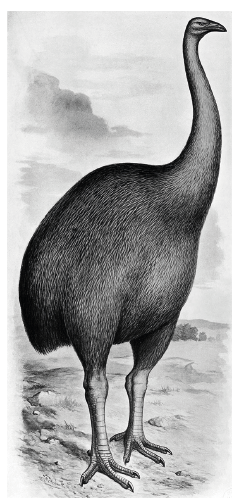
The North Island giant moa (Dinornis novaezelandiae) became extinct sometime between the arrival of humans in New Zealand and the early 19th century.

What is considered by scientists to be the most likely reason for this extinction?

A. Deforestation
B. New diseases
C. Competition with other megafauna
D. Overhunting

▶️ Answer/Explanation
Evidence suggests that the North Island giant moa was hunted extensively by early human settlers in New Zealand. The species’ large size and inability to fly made it an easy target. This intense human predation led to a rapid decline in population, ultimately resulting in overhunting-driven extinction.
Answer: (D) Overhunting

Question 

What happens during competitive exclusion when two species share overlapping ecological niches?

I. They compete for identical resources and cannot coexist in the same niche.
II. Competing species are regulated by predators within the ecosystem.
III. Both species become confined to a smaller portion of their fundamental niche.

A. I and II only
B. I and III only
C. III only
D. I, II and III

▶️ Answer/Explanation
The competitive exclusion principle states that two species competing for the same resources cannot coexist indefinitely in the same ecological niche. One species typically outcompetes the other, forcing it to occupy a different or smaller part of its fundamental niche. This makes statements I and III correct.
Answer: (B) I and III only

Question 

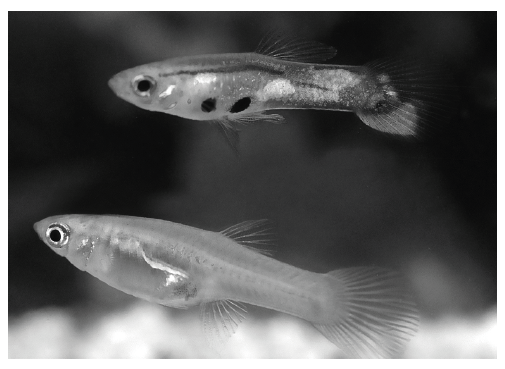
In a series of studies, Mark investigated sexual and natural selection in Trinidadian guppies (Poecilia reticulata) by varying environmental conditions and predation pressure.

What conclusion was drawn from Mark’s experiments?

A. Guppies have no predators in their native streams.
B. Male guppies show preference for dull-coloured females.
C. Predation pressure determines the colour patterns of guppies in different habitats.
D. Guppies remain unaffected by the presence of other fish species.

▶️ Answer/Explanation
Mark’s research showed that predation plays a key role in guppy colour variation. In areas with high predation, males evolved duller colours for better camouflage, while in low-predation environments, males displayed brighter colours to attract mates. This demonstrates the interaction between natural and sexual selection in evolution.
Answer: (C) Predation influences the colour of guppies in different environments.
Scroll to Top