
Morphology and Modifications of Flowering Plants
📌 Introduction
The term morphology is derived from Ancient Greek:
- Morphe meaning form
- Logos meaning study
Morphology is the study of: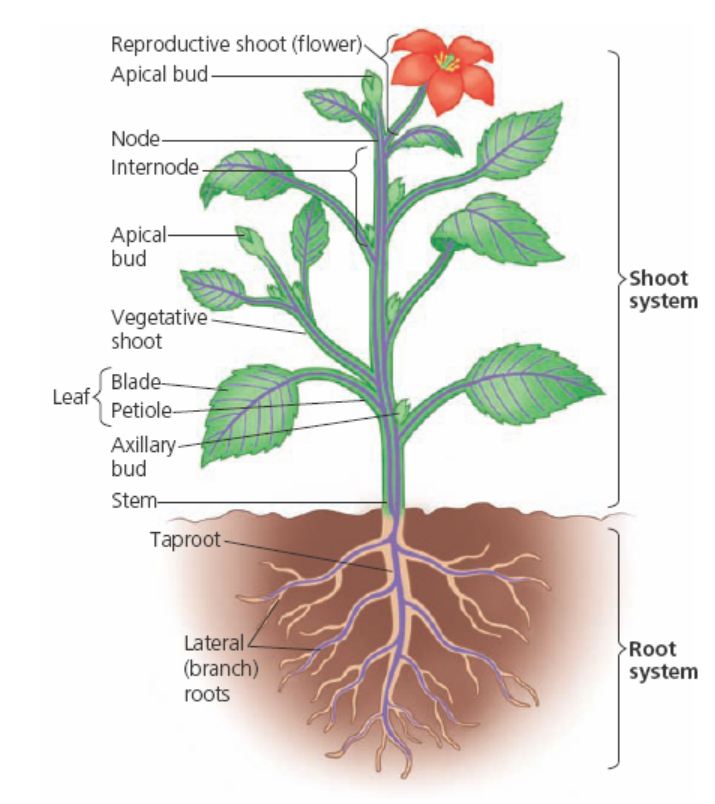
- External form of plants
- Internal structure of plants
- Ontogenic development of the plant body and its organs
Flowering plants are terrestrial organisms and live in two contrasting environments:
- Below the ground → water and mineral absorption
- Above the ground → light and CO₂ absorption
To efficiently acquire these resources, plants evolved three basic organs:
- Root
- Stem
- Leaf
These organs together form:
- Root system → develops from radicle of seed
- Shoot system → develops from plumule of seed
🌿 The Root
📌 Definition
The root is a plant organ that:
- Anchors the plant in soil
- Absorbs water and minerals
- Often stores food materials
🌱 Types of Root Systems
1. Tap Root System
- Found in dicot plants

- Develops from elongation of radicle
- Primary root gives rise to secondary and lateral roots
- Helps in strong anchorage
- Example: Mustard
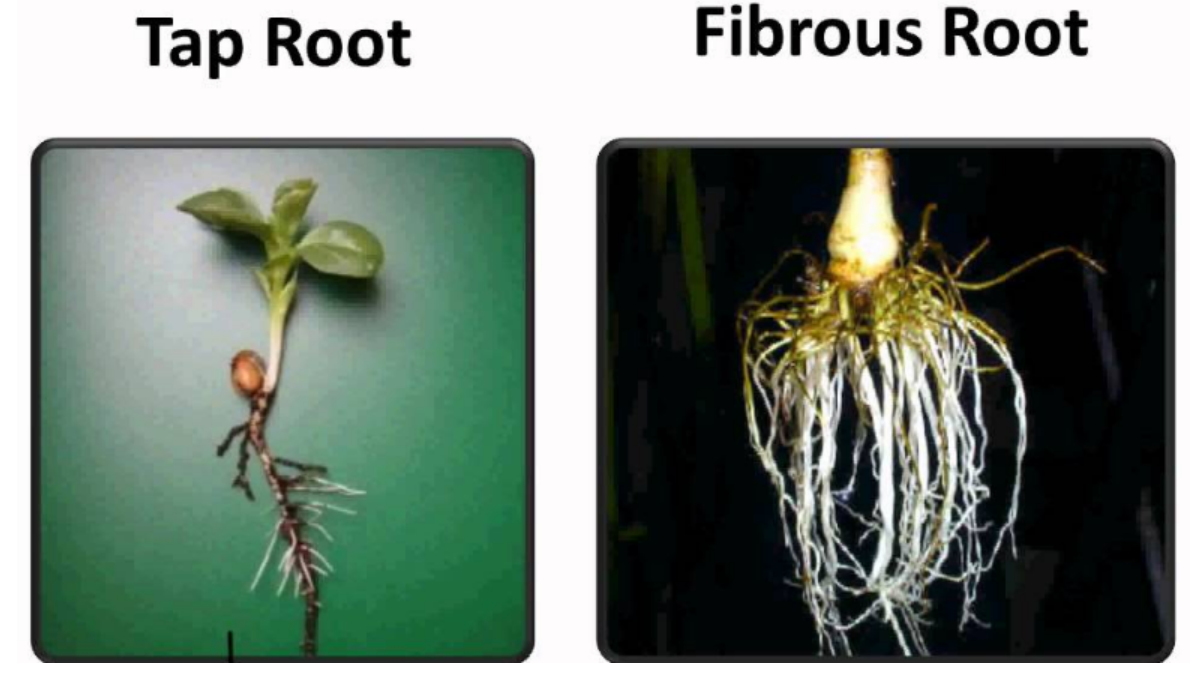
2. Fibrous Root System
- Found in monocot plants
- Primary root dies early
- Many roots arise from base of stem
- Roots are adventitious
- Example: Wheat, maize
🔄 Modification of Roots
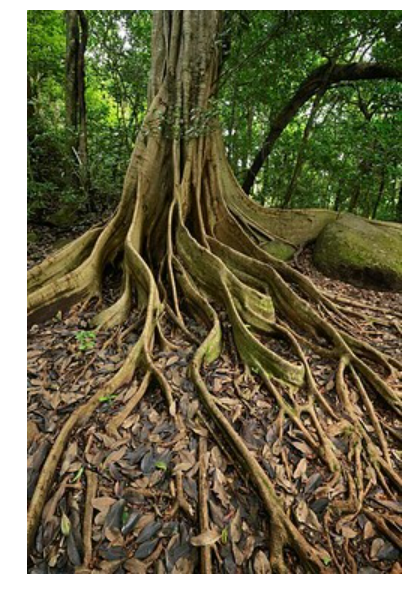
Roots may modify to perform special functions other than absorption.
For Support
- Buttress roots → large trees in tropical regions
- Stilt roots → maize
- Prop roots → banyan tree
For Storage of Food
Tap roots of:
- Carrot
- Turnip
Adventitious roots of:
- Sweet potato
For Respiration
- Pneumatophores or air roots
- Found in mangroves
- Grow vertically upward to absorb oxygen
🌾 The Stem
Definition
- Develops from plumule
- Bears nodes and internodes
- Supports leaves, flowers, and fruits
Functions of Stem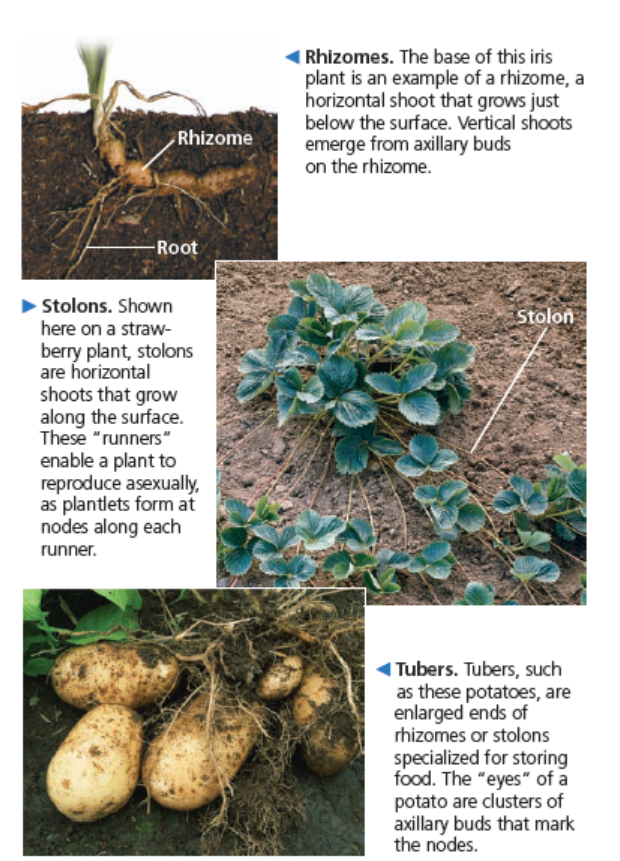
- Supports aerial plant parts
- Positions leaves for maximum photosynthesis
- Helps in pollination and fruit dispersal
Modification of Stem
Stems may modify for:
- Storage
- Vegetative reproduction
Examples of modified stems:
- Rhizome
- Stolon
- Tuber
These are often mistaken as roots but are actually modified shoots.
🍃 The Leaf
Definition
The leaf is the main photosynthetic organ of vascular plants.
Features of Leaf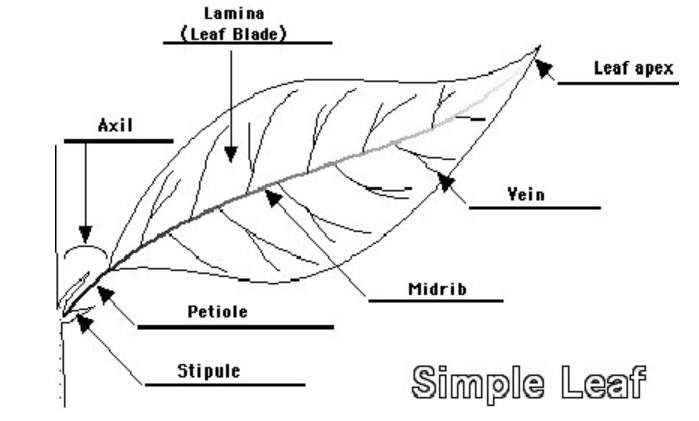
- Arises from node
- Bears a bud in its axil
- Developed from apical meristem
- Arranged in acropetal order
Structure of Leaf
- Lamina → flat blade
- Petiole → stalk connecting leaf to stem
Venation
Arrangement of veins in leaf:
| Plant Type | Venation |
|---|---|
| Monocots | Parallel venation |
| Dicots | Reticulate venation |
Phyllotaxy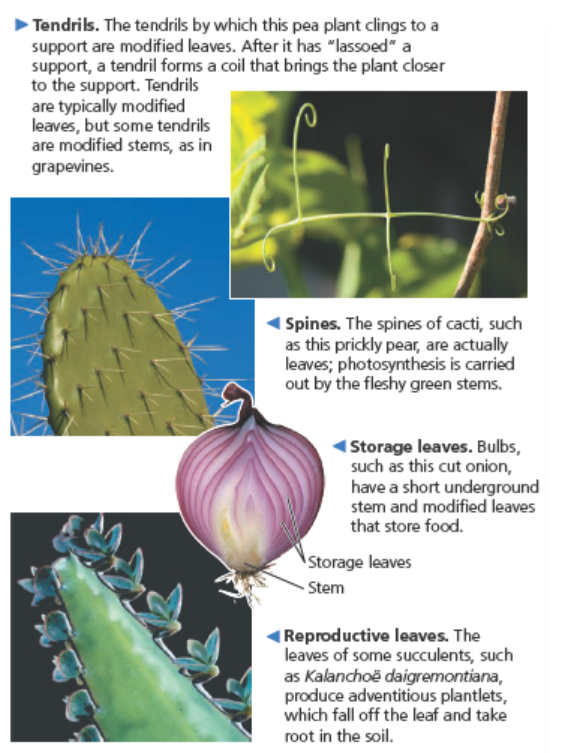
Arrangement of leaves on stem:
- Alternate
- Opposite
- Whorled
Modification of Leaves
Leaves may modify for special functions:
- Tendrils → climbing (pea)
- Spines → protection (cactus)
- Fleshy leaves → storage (onion, garlic)
- Insectivorous leaves → nutrition (pitcher plant, Venus flytrap)
🌸 The Flower
Definition
- Shoot apical meristem becomes floral meristem
- Leaves are replaced by floral parts
Flower is the reproductive unit of angiosperms.
Structure of Flower
- Pedicel → stalk of flower
- Receptacle (Thalamus) → swollen part bearing floral whorls
Floral Whorls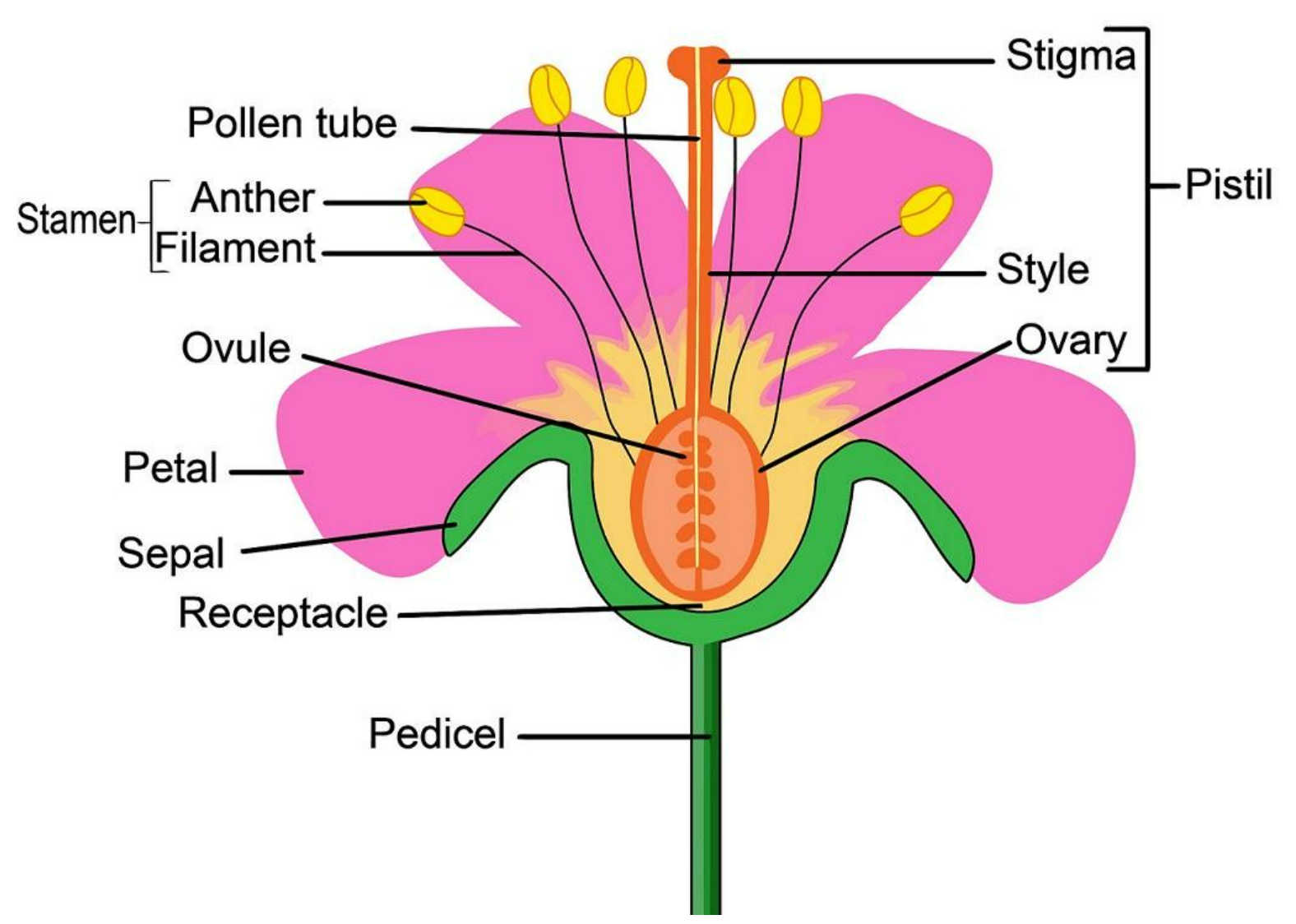
1. Calyx
- Outermost whorl
- Made of sepals
- Gamosepalous → fused
- Polysepalous → free
2. Corolla
- Made of petals
- Brightly colored
- Gamopetalous → fused
- Polypetalous → free
3. Androecium
- Male reproductive part
- Made of stamens
Each stamen has:
- Filament
- Anther
4. Gynoecium
- Female reproductive part
- Made of carpels
Each carpel has:
- Stigma
- Style
- Ovary
Aestivation: Arrangement of sepals or petals in floral bud with respect to other members of the same whorl.
Inflorescence: Arrangement of flowers on floral axis is called inflorescence.
🍎 The Fruit 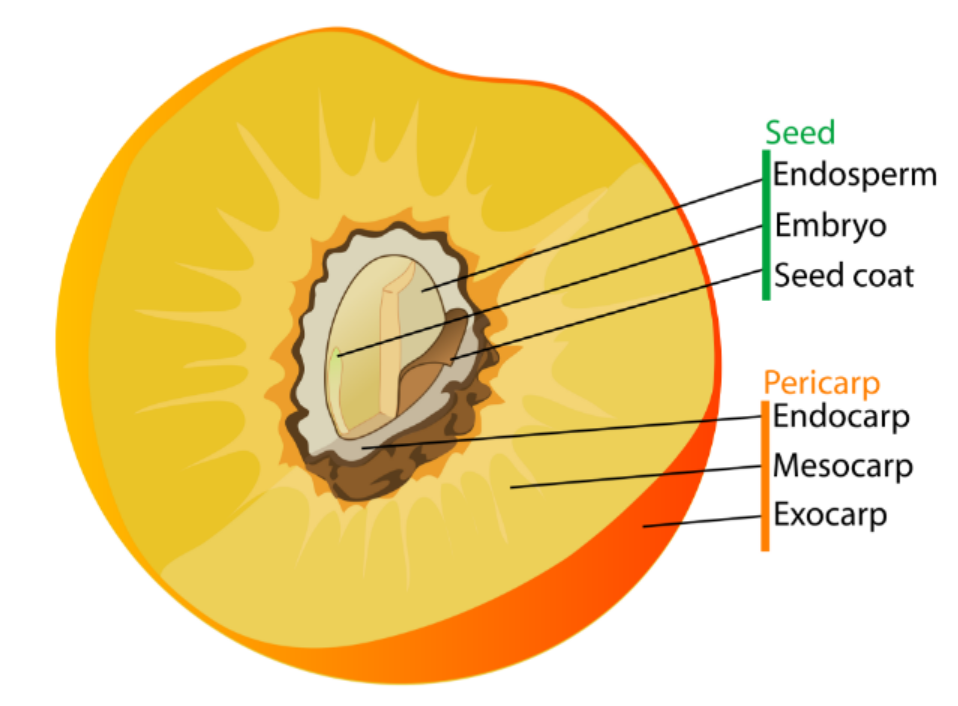
Definition
A fruit is a mature ovary formed after fertilization.
Fruit formed without fertilization → Parthenocarpic fruit
Fruit Development
- Ovary wall becomes pericarp
- Pericarp may be:
- Dry
- Fleshy
🌰 The Seed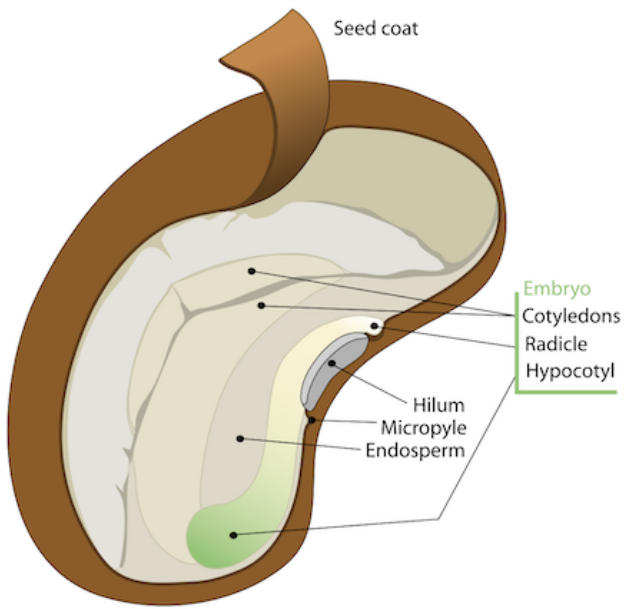
Definition
The ovule after fertilization develops into a seed.
Seed Structure
- Seed coat
- Embryo, consisting of:
- Radicle
- Embryonal axis
- One or two cotyledons
📐 Floral Diagram and Floral Formula
📌 Importance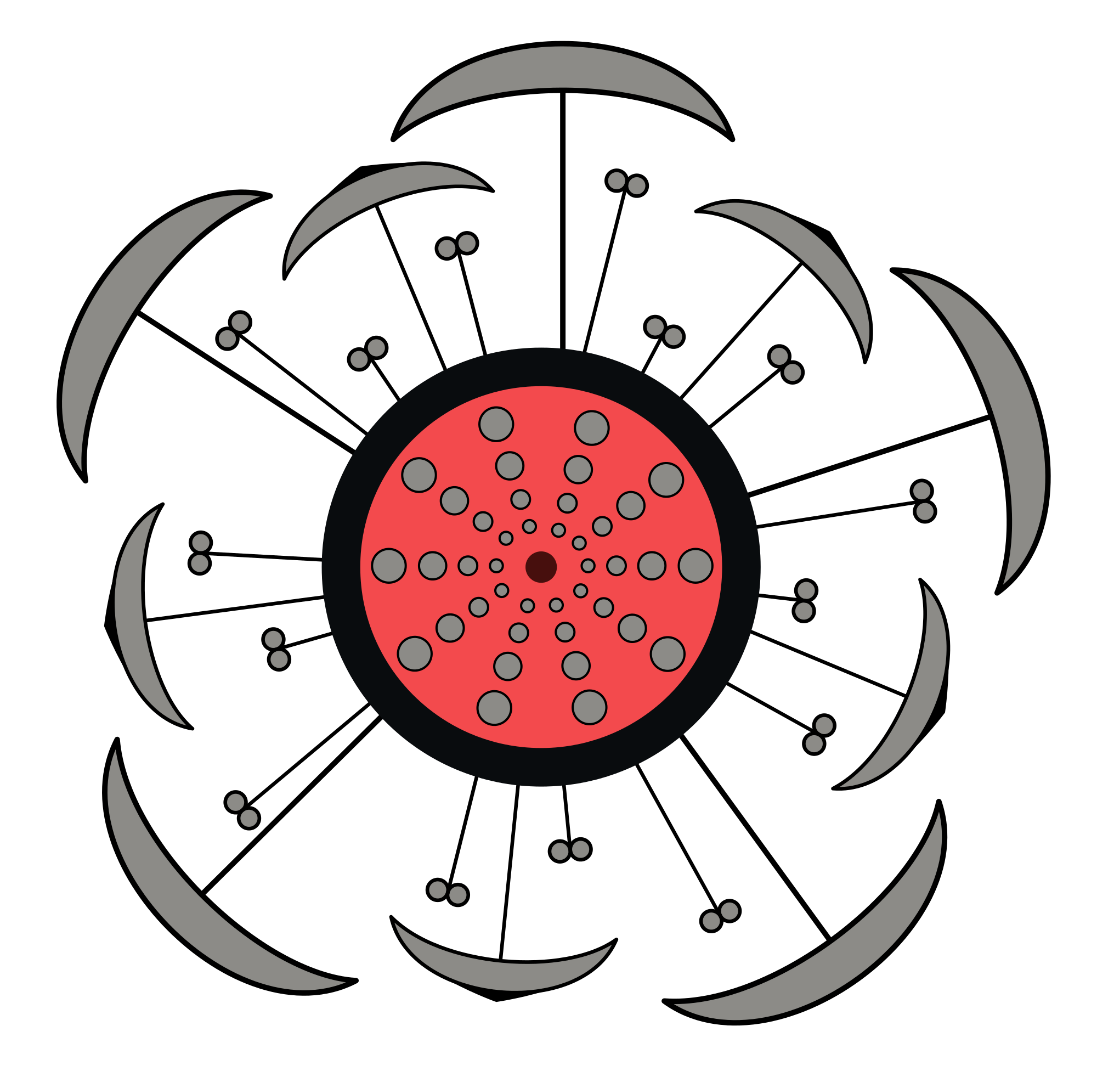
Used to describe a flowering plant in a short and systematic manner.
Plant description includes:
- Habit
- Vegetative characters
- Floral characters
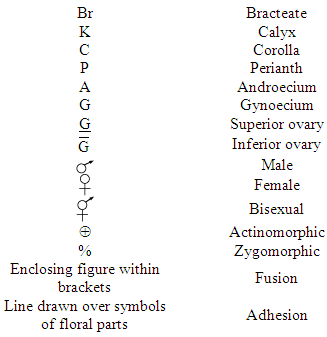
- Floral diagram and floral formula use standard symbols to represent flower structure.
Symbols and their description in floral formula
📦 Quick Recap
Morphology studies form and structure of plants
Root, stem, and leaf are basic organs
Roots modify for support, storage, respiration
Stems modify for storage and reproduction
Leaves modify for protection, climbing, nutrition
Flower is reproductive organ
Fruit develops from ovary
Seed develops from ovule
Floral diagram and formula simplify plant description
Plant Tissues
📌 Introduction
In morphology of flowering plants, understanding plant tissues is important because tissues form the basic structural framework of roots, stems, leaves, flowers, and fruits.
A tissue is a group of cells having similar origin, structure, and function, working together to perform a specific role in the plant body.
🌱 Classification of Plant Tissues
Plant tissues are broadly classified into two main types:
- Meristematic tissues
- Permanent tissues
🧬 Meristematic Tissues
Definition
Meristematic tissues consist of actively dividing cells.
They are responsible for growth of the plant.
Characteristics of Meristematic Tissues
- Cells are living and actively dividing
- Cell wall is thin and elastic
- Dense cytoplasm
- Large nucleus
- Vacuoles are absent or very small
- Cells are compactly arranged, no intercellular spaces
📍 Types of Meristematic Tissues (Based on Position)
1. Apical Meristem
- Present at:
- Root apex
- Shoot apex
- Causes increase in length of plant
- Responsible for primary growth
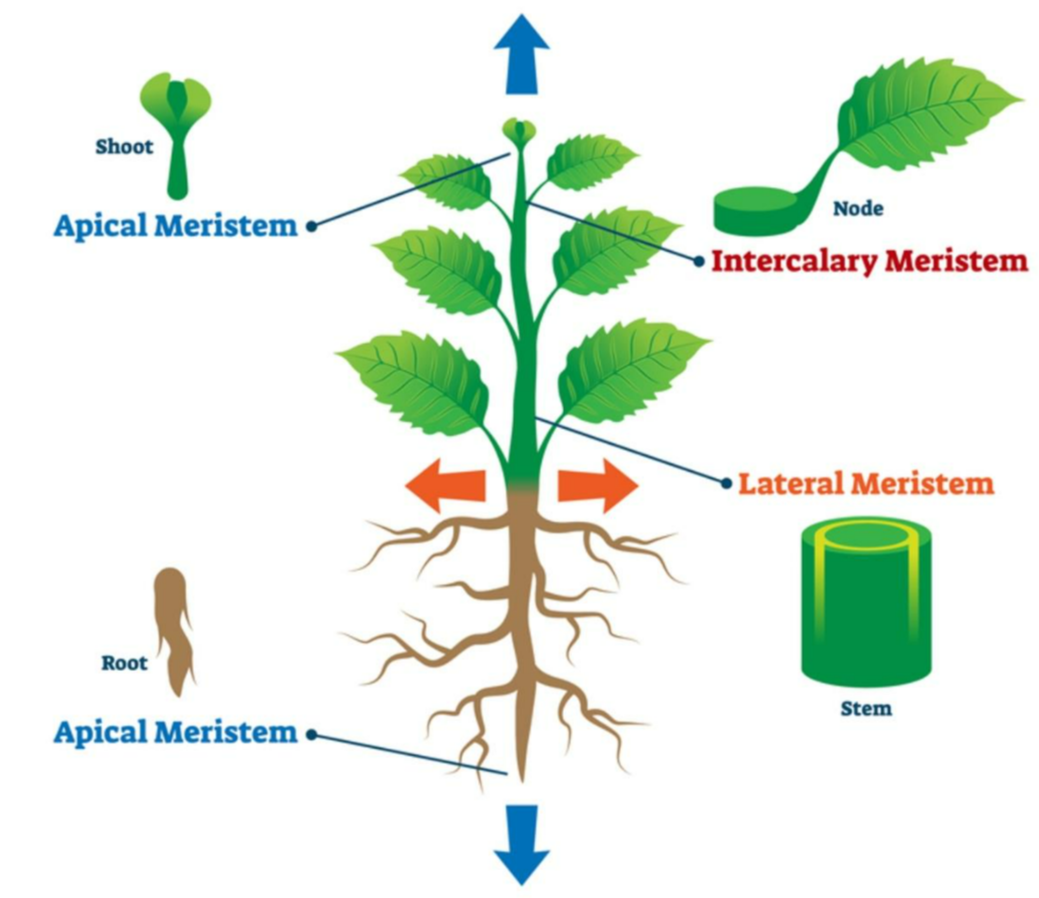
2. Intercalary Meristem
- Found at:
- Base of leaves
- Base of internodes (especially in grasses)
- Helps in regrowth of leaves
- Important in plants like grasses and bamboo
3. Lateral Meristem
- Found along the sides of stem and roots
- Causes increase in girth
- Responsible for secondary growth
Examples:
- Vascular cambium
- Cork cambium
🌿 Permanent Tissues
Definition
Permanent tissues are formed from meristematic tissues.
They have lost the ability to divide and are specialized to perform specific functions.
Types of Permanent Tissues
Permanent tissues are of two types:
- Simple permanent tissue
- Complex permanent tissue
🍃 Simple Permanent Tissues
Characteristics
- Made up of only one type of cells
- Perform basic functions like storage, support, and photosynthesis
1. Parenchyma
Features
- Cells are living
- Thin cell walls
- Large intercellular spaces
- Vacuole is prominent
Functions
- Storage of food
- Photosynthesis (chlorenchyma)
- Gas exchange (aerenchyma)
Found in:
- Cortex
- Pith
- Mesophyll of leaves
2. Collenchyma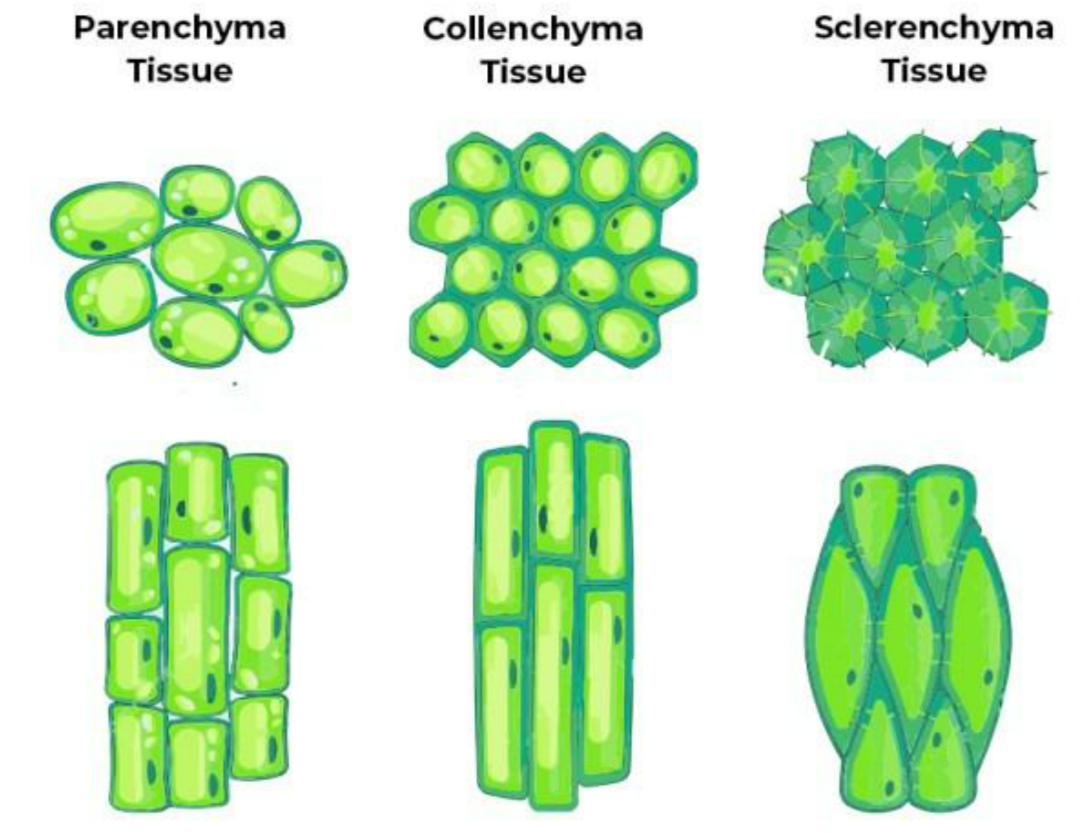
Features
- Cells are living
- Cell walls are unevenly thickened at corners
- Little intercellular space
Functions
- Provides mechanical support
- Gives flexibility to plant parts
Found in:
- Petiole
- Hypodermis of dicot stem
- Leaf margins
3. Sclerenchyma
Features
- Cells are dead
- Cell walls are thick and lignified
- No intercellular spaces
Functions
- Provides strength and rigidity
Types:
- Fibres
- Sclereids
Found in:
- Coconut husk
- Seed coats
🌾 Complex Permanent Tissues
Definition
Complex tissues are made up of more than one type of cells working together to perform a common function.
1. Xylem
Function
- Transport of water and minerals
- Provides mechanical support
Elements of Xylem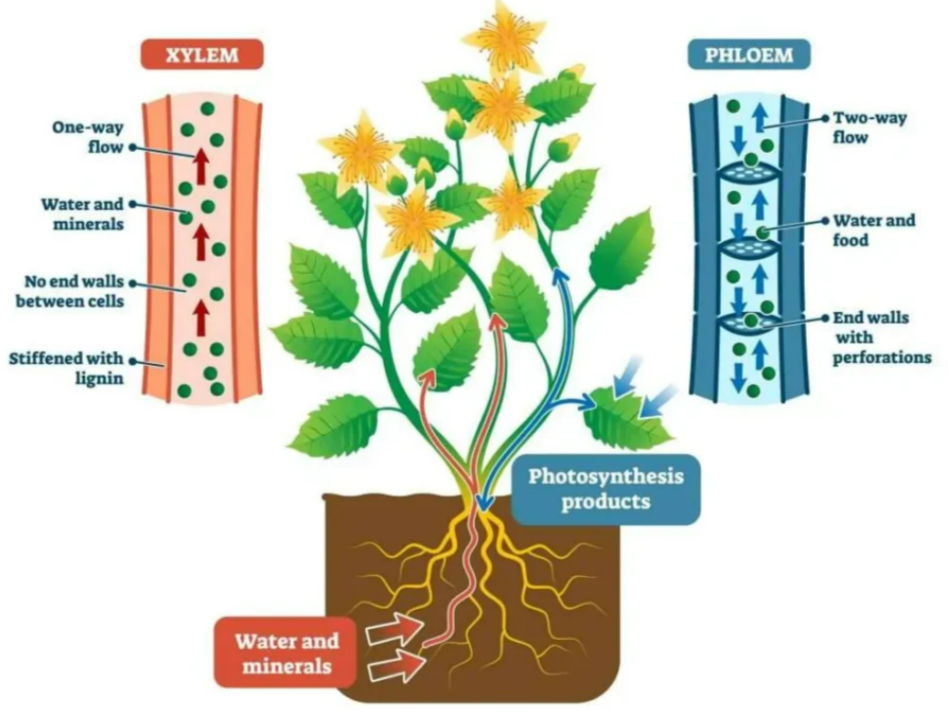
- Tracheids
- Vessels
- Xylem fibres
- Xylem parenchyma
Except xylem parenchyma, all are dead cells.
2. Phloem
Function
Transport of food materials (photosynthates)
Elements of Phloem
- Sieve tubes
- Companion cells
- Phloem fibres
- Phloem parenchyma
Phloem fibres are dead; others are living.
🔗 Role of Plant Tissues in Morphology
- Roots → xylem, phloem, parenchyma for absorption and transport
- Stems → collenchyma and sclerenchyma for support
- Leaves → parenchyma for photosynthesis
- Flowers and fruits → specialized tissues for reproduction
📦 Quick Recap
Plant tissues are groups of similar cells
Two main types: Meristematic and Permanent
Meristematic tissues cause growth
Permanent tissues perform specialized functions
Simple tissues give support and storage
Complex tissues transport water and food
Tissues form the structural basis of plant morphology
Anatomy and Functions of Different Parts of Flowering Plants
📌 Introduction
Anatomy deals with the internal structure of plant organs, while morphology deals with external form.
In flowering plants, proper understanding of root, stem, leaf, inflorescence, flower, fruit, and seed is essential for:
- Identifying plants in practicals
- Understanding functions
- Studying families like Malvaceae, Cruciferae, Leguminosae, Compositae, and Graminae
🌱 ROOT
Anatomy of Root (Dicot Root as Standard)
🌿 Internal Structure
From outside to inside:
1. Epiblema (Rhizodermis)
- Outermost layer
- Bears root hairs
- Helps in absorption of water and minerals
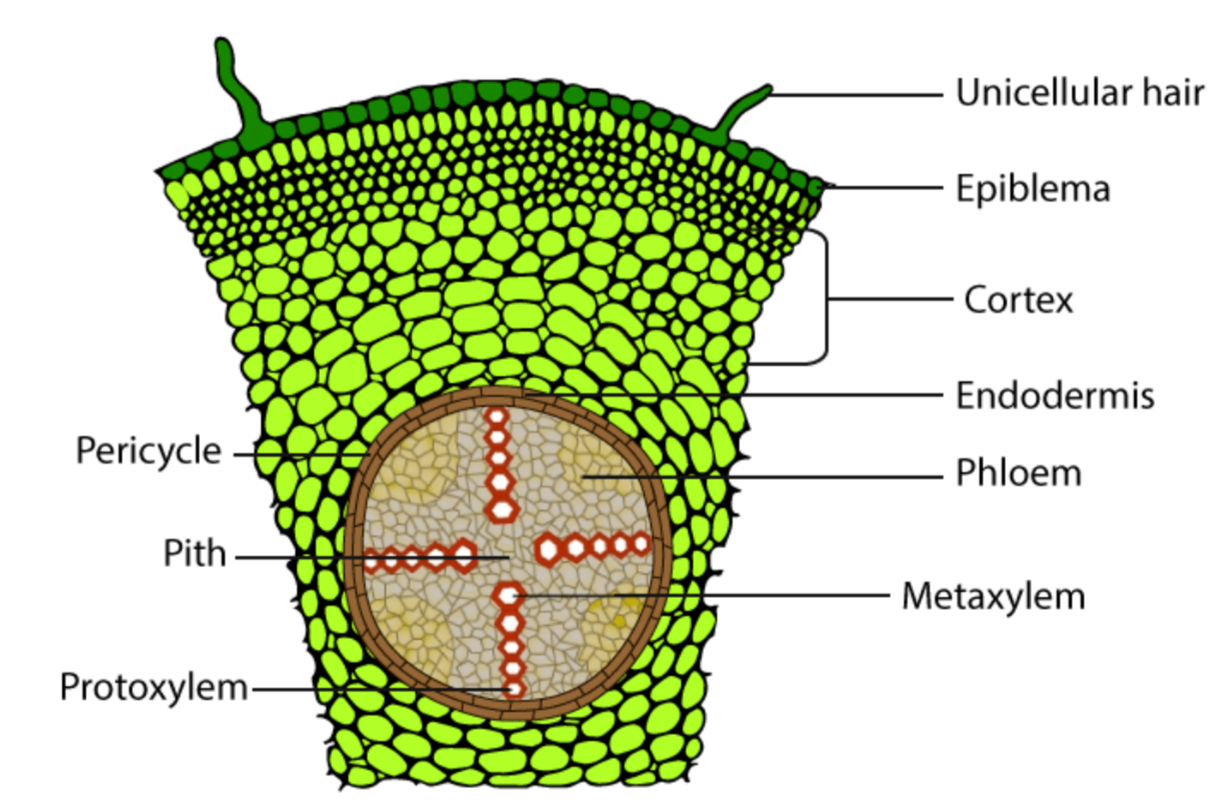
2. Cortex
- Made of parenchyma
- Stores food
- Allows movement of water
3. Endodermis
- Innermost layer of cortex
- Has Casparian strips
- Regulates entry of water into vascular tissue
4. Pericycle
- Single-layered
- Gives rise to lateral roots
5. Vascular Tissue
- Xylem and phloem are radial
- Xylem is exarch
6. Pith
- Small or absent in dicot root
🌿 Functions of Root
- Absorption of water and minerals
- Anchorage
- Storage of food
- Conduction
🌾 STEM
Anatomy of Stem (Dicot Stem)
🌿 Internal Structure
1. Epidermis
- Protective layer
- Covered with cuticle
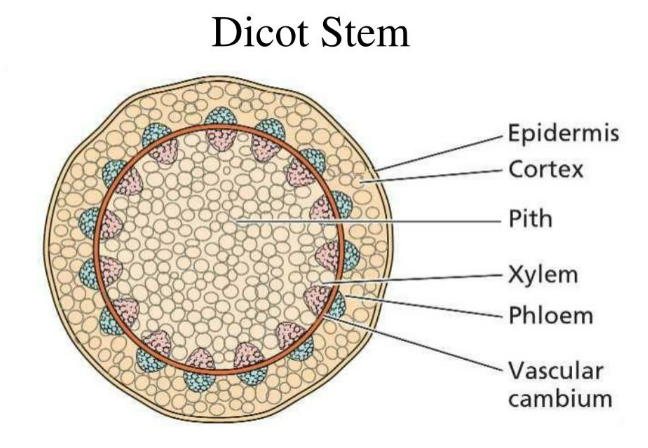
2. Hypodermis
- Made of collenchyma
- Provides mechanical support
3. Cortex
- Parenchymatous
- Storage and photosynthesis
4. Endodermis
- Starch sheath
- Stores starch
5. Pericycle
- Fibres provide strength
6. Vascular Bundles
- Conjoint, collateral, open
- Xylem inside, phloem outside
- Cambium present
7. Pith
- Large
- Storage of food
🌿 Functions of Stem
- Support to aerial parts
- Transport of water and food
- Storage
- Vegetative reproduction
🍃 LEAF
Anatomy of Leaf (Dorsiventral Leaf)
🌿 Internal Structure
1. Upper Epidermis
- Protective
- Cuticle present
2. Mesophyll
- Palisade parenchyma → photosynthesis
- Spongy parenchyma → gas exchange
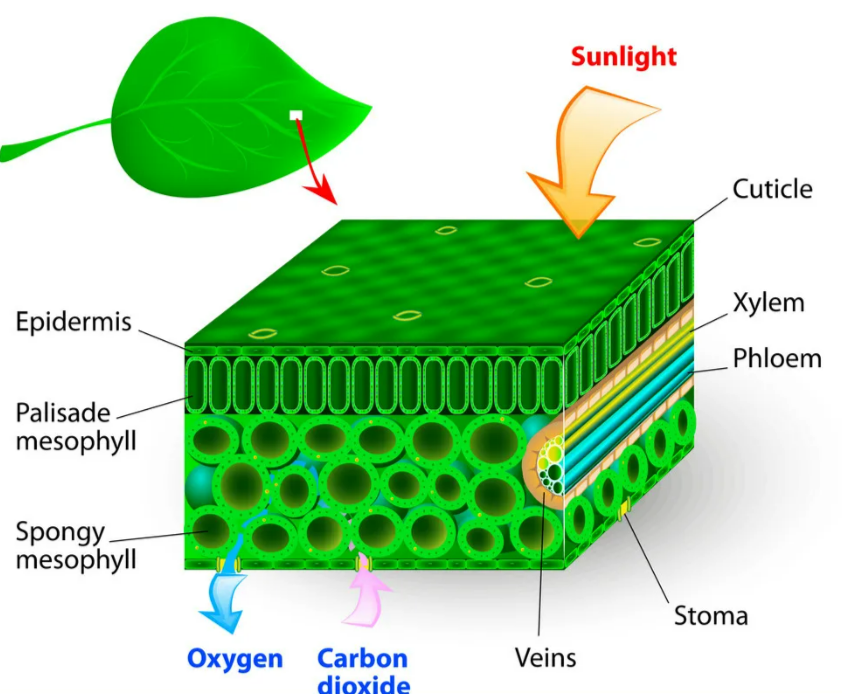
3. Lower Epidermis
- Stomata present
- Transpiration and gas exchange
4. Vascular Bundles
- Xylem and phloem
- Surrounded by bundle sheath
🌿 Functions of Leaf
- Photosynthesis
- Transpiration
- Respiration
- Storage (modified leaves)
🌸 INFLORESCENCE
Definition
Arrangement of flowers on the floral axis is called inflorescence.
🌺 Types of Inflorescence
1. Racemose Inflorescence
- Main axis continues to grow
- Flowers arranged in acropetal order
- (older at base, younger at apex)
- Examples: Mustard, Radish
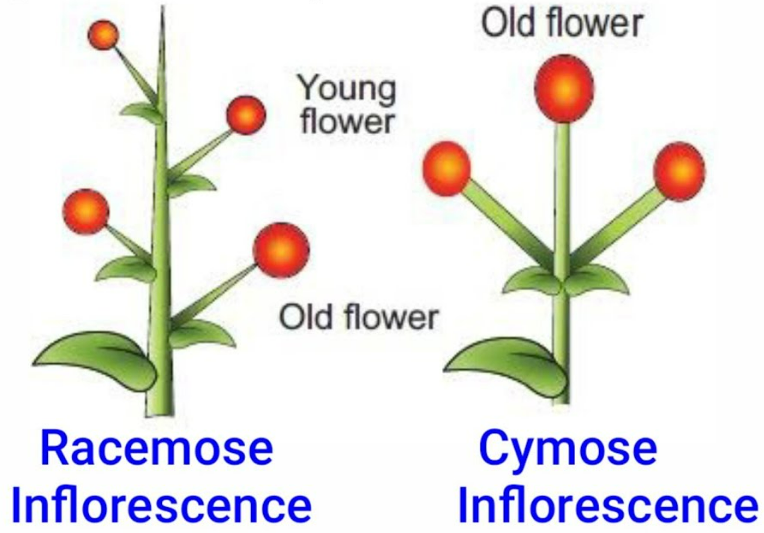
2. Cymose Inflorescence
- Main axis terminates in a flower
- Flowers arranged in basipetal order
- (older at apex, younger at base)
- Examples: Jasmine, Cotton
| Feature | Racemose | Cymose |
|---|---|---|
| Growth of axis | Indefinite | Definite |
| Order of flowers | Acropetal | Basipetal |
| Flower number | Many | Limited |
🌼 FLOWER
🌿 Structure and Functions
- Flower is reproductive organ of angiosperms
- Consists of four whorls:
- Calyx → protection
- Corolla → attraction
- Androecium → male reproduction
- Gynoecium → female reproduction
🍎 FRUIT
Anatomy and Function
- Fruit is a mature ovary
- Pericarp has:
- Epicarp
- Mesocarp
- Endocarp
Functions
- Protects seed
- Helps in dispersal
🌰 SEED
🌿 Structure
- Seed coat → protection
- Embryo:
- Radicle
- Plumule
- Cotyledons
🌿 Functions
- Propagation
- Food storage
- Perennation
🌺 IMPORTANT FAMILIES
Family: Malvaceae (China Rose)
- Habit: Shrub
- Leaves: Alternate, stipulate
- Inflorescence: Cymose
- Flower: Bisexual, actinomorphic
- Calyx: 5, gamosepalous
- Corolla: 5, polypetalous
- Androecium: Numerous, monadelphous
- Gynoecium: 5 carpels, superior ovary
Family: Cruciferae (Mustard)
- Leaves: Alternate
- Inflorescence: Racemose
- Flower: Tetramerous
- Androecium: Tetradynamous
- Gynoecium: Bicarpellary
- Fruit: Siliqua
Family: Leguminosae (Pea)
- Root: Tap root with nodules
- Flower: Zygomorphic
- Corolla: Papilionaceous
- Androecium: Diadelphous (9+1)
- Fruit: Legume
Family: Compositae (Sunflower)
- Inflorescence: Capitulum
- Flowers: Disc and ray florets
- Calyx: Pappus
- Fruit: Cypsela
Family: Graminae (Wheat)
- Stem: Hollow
- Leaves: Sheathing
- Inflorescence: Spikelet
- Flower: Reduced
- Fruit: Caryopsis
📦 Quick Recap
Root absorbs and anchors
Stem conducts and supports
Leaf photosynthesizes
Racemose → indefinite growth
Cymose → definite growth
Flower is reproductive unit
Fruit protects seed
Seed ensures continuity
Family characters are highly scoring in practicals