
Heredity and Variation: Mendelian Inheritance
🌿 Introduction
Every organism produces offspring that resemble them, but no two individuals (except identical twins) are fully alike.
This similarity comes from heredity, and the differences arise due to variation.
Understanding Mendelian inheritance helps us decode how traits pass from one generation to the next, why certain traits skip generations, and how predictable ratios appear in progeny.
🧬 Heredity
Meaning: Passing genetic information from parents to offspring through genes.
Key points
- Genes lie on chromosomes.
- Each gene controls one character.
- Genes exist in pairs in diploid organisms.
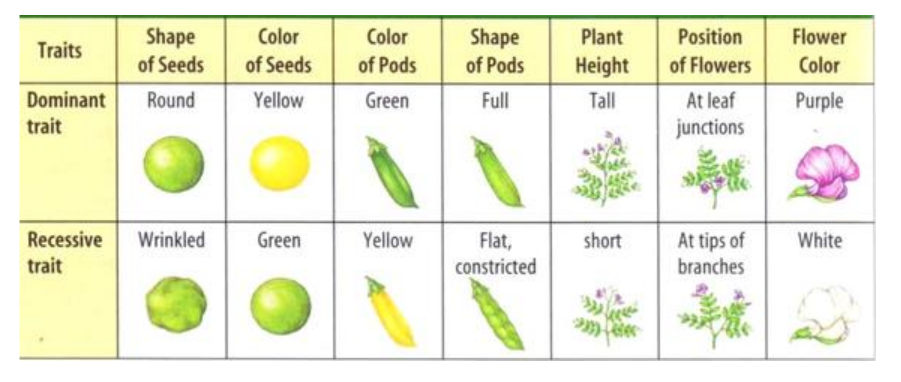
- These paired forms are called alleles.
- During gamete formation, alleles are separated and passed on to the next generation.
Mendel called these “factors”; today we call them genes.
🌼 Variation
Meaning: Degree to which offspring differ from their parents.
Sources of variation
- Crossing-over during meiosis causes new recombinations
- Independent assortment of chromosomes
- Random fusion of gametes
These processes create genetic variability even among siblings.
Simple example
Through generations of artificial selection, ancestral cows gave rise to modern breeds like Sahiwal cows.
🌾 Mendel and His Experiments
Gregor Mendel studied the garden pea (Pisum sativum) and formed the foundation of classical genetics.
Why pea plant was ideal
- Clear contrasting traits (tall/dwarf, round/wrinkled, etc.)
- Short life cycle
- Produces many seeds
- Flowers naturally self-pollinate
- Artificial cross-pollination is easy
- Hybrids remain fertile
Mendel’s Working Strategy (Why his results were so accurate)
- Studied one trait at a time
- Used true-breeding parent plants (homozygous)
- Prevented contamination by unwanted pollen
- Used large sample sizes
- Applied statistics + probability to his results
- Recorded observations for 7 years
🌱 Inheritance of One Gene (Monohybrid Cross)
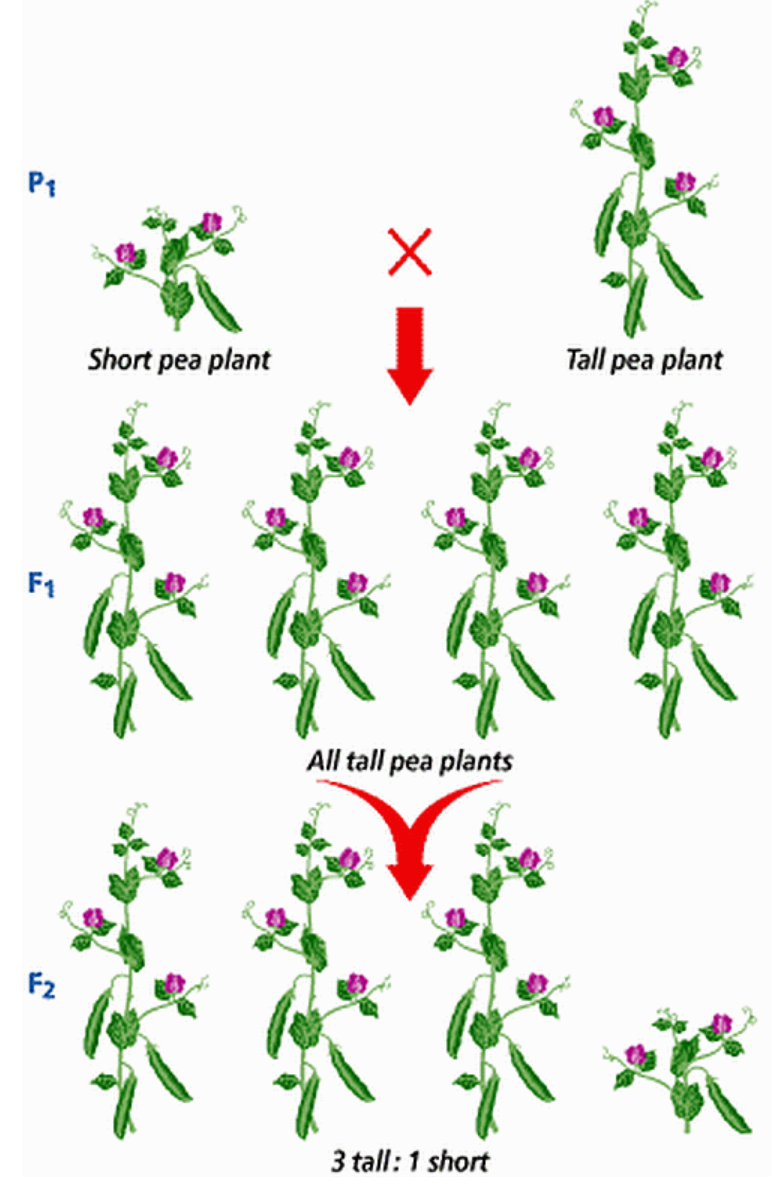
Mendel crossed:
Tall plant (TT) × Dwarf plant (tt)
F1 Generation
- All plants were Tall
- The dwarf trait was hidden
- This showed dominance
F2 Generation
Selfing F1 (Tt × Tt) gave:
- Phenotype: Tall : Dwarf = 3 : 1
- Genotype: 1 TT : 2 Tt : 1 tt
Important genetic terms
- Alleles: Two alternate forms of the same gene (T, t)
- Homozygous: TT or tt
- Heterozygous: Tt
- Dominant allele: Expresses even in single copy (T)
- Recessive allele: Expresses only in double copy (tt)
🧩 Mendel’s Laws of Inheritance
1. Law of Dominance
- A dominant allele masks the effect of the recessive allele
- Recessive allele expresses only when both alleles are recessive
Example: T (tall) dominates t (dwarf)
Key line: F1 always shows dominant phenotype.
2. Law of Segregation (Purity of Gametes)
- Alleles of a gene separate during gamete formation
- Each gamete receives one allele only
- No blending of characters
- The F2 ratio (3:1) occurs because of segregation
Gamete types
- Homozygous → produces one type of gamete
- Heterozygous → produces two types of gametes (T or t)
3. Law of Independent Assortment
- When two characters are studied together, the segregation of one pair of alleles is independent of the other
- Leads to formation of new combinations
- Demonstrated through dihybrid cross
🌾 Inheritance of Two Genes (Dihybrid Cross)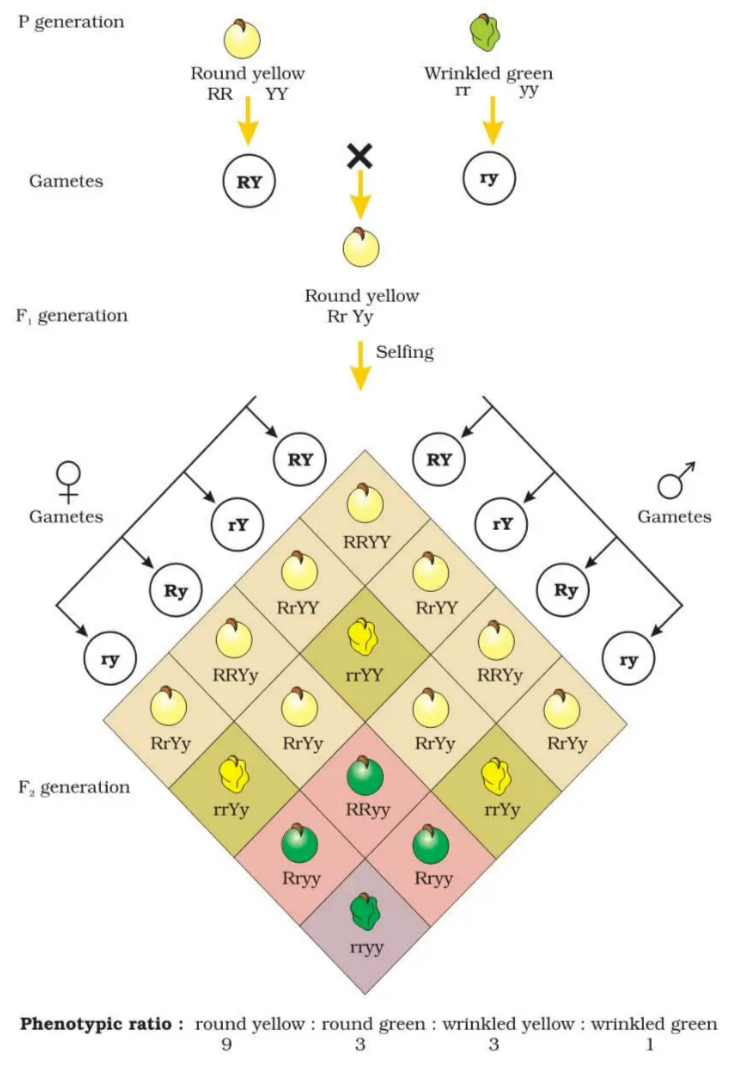
Mendel crossed:
RRYY (Round Yellow) × rryy (Wrinkled Green)
F1 Generation
- All seeds were Round Yellow (RrYy)
F2 Generation
Gave 9:3:3:1 phenotypic ratio
- 9 Round Yellow
- 3 Round Green
- 3 Wrinkled Yellow
- 1 Wrinkled Green
Why 9:3:3:1 appears?
- Alleles segregate (law of segregation)
- Different allele pairs assort independently (law of independent assortment)
- Gametes combine randomly at fertilisation
📘 Summary Table
| Topic | Key NEET Points |
|---|---|
| Heredity | Passing traits via genes |
| Variation | New combinations from recombination + assortment |
| True breeding | Homozygous parent lines |
| Monohybrid ratio | Phenotype 3:1 |
| Monohybrid genotype | 1:2:1 |
| Dihybrid ratio | 9:3:3:1 |
| Dominance | One allele masks another |
| Segregation | Gametes are pure for alleles |
| Independent assortment | Traits sort independently |
🧾 Quick Recap
Heredity → Gene transfer from parents
Variation → Recombination + meiosis events
Mendel → Pea plant, true-breeding lines
Monohybrid cross → 3:1 ratio
Dihybrid cross → 9:3:3:1 ratio
Laws → Dominance, Segregation, Independent Assortment
Alleles → TT, Tt, tt
Dominant hides recessive
Gametes are always pure
Deviations from Mendelism
Mendel’s laws explained many inheritance patterns, but not all.
Some characters show patterns that do not follow simple dominance–recessive rules.
These modified patterns are called Deviations from Mendelian inheritance.
🌿 1. Incomplete Dominance
In this condition, neither allele is completely dominant over the other.
The heterozygote shows a blended/intermediate phenotype.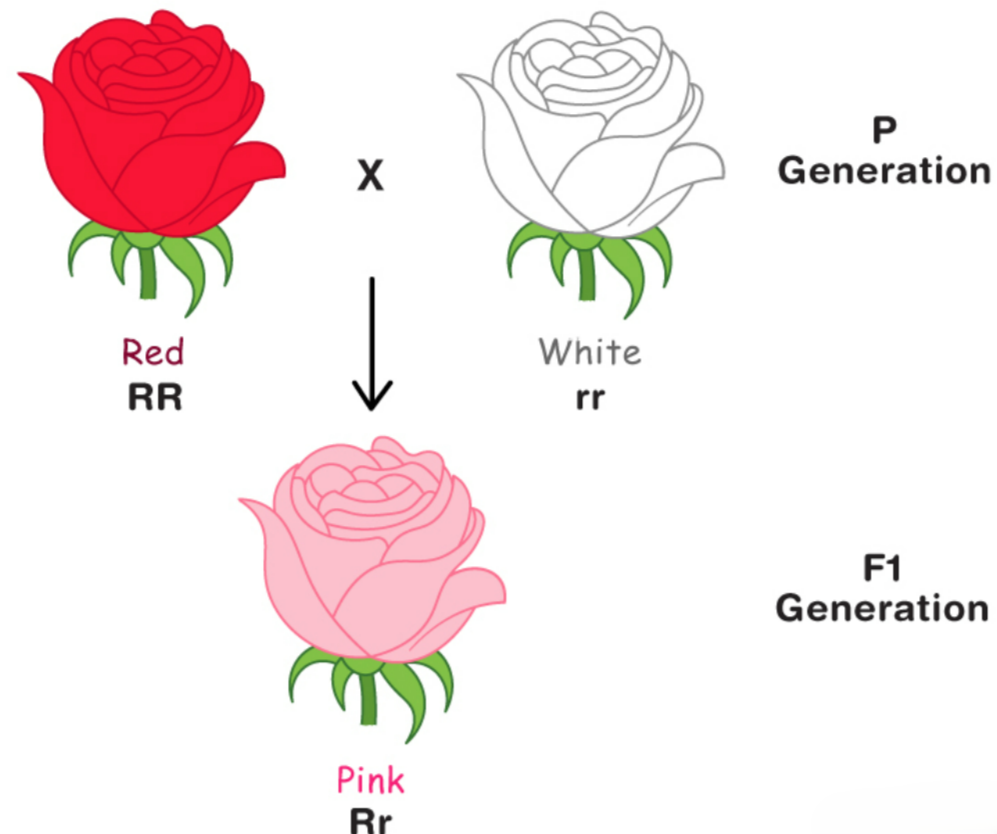
Key Features
- Dominance is partial/incomplete
- F1 phenotype is intermediate
- F2 ratio (phenotype) = 1 : 2 : 1
- Genotype and phenotype ratios are the same
Classic Example: Flower colour in Snapdragon (Antirrhinum)
- Red flower (RR) × White flower (rr)
- F1: Pink (Rr)
- F2: Red : Pink : White = 1:2:1
Why this happens?
Because the dominant allele produces only some pigment, not enough to mask the recessive allele completely.
🌱 2. Codominance
In codominance, both alleles express fully in the heterozygote.
There is no blending.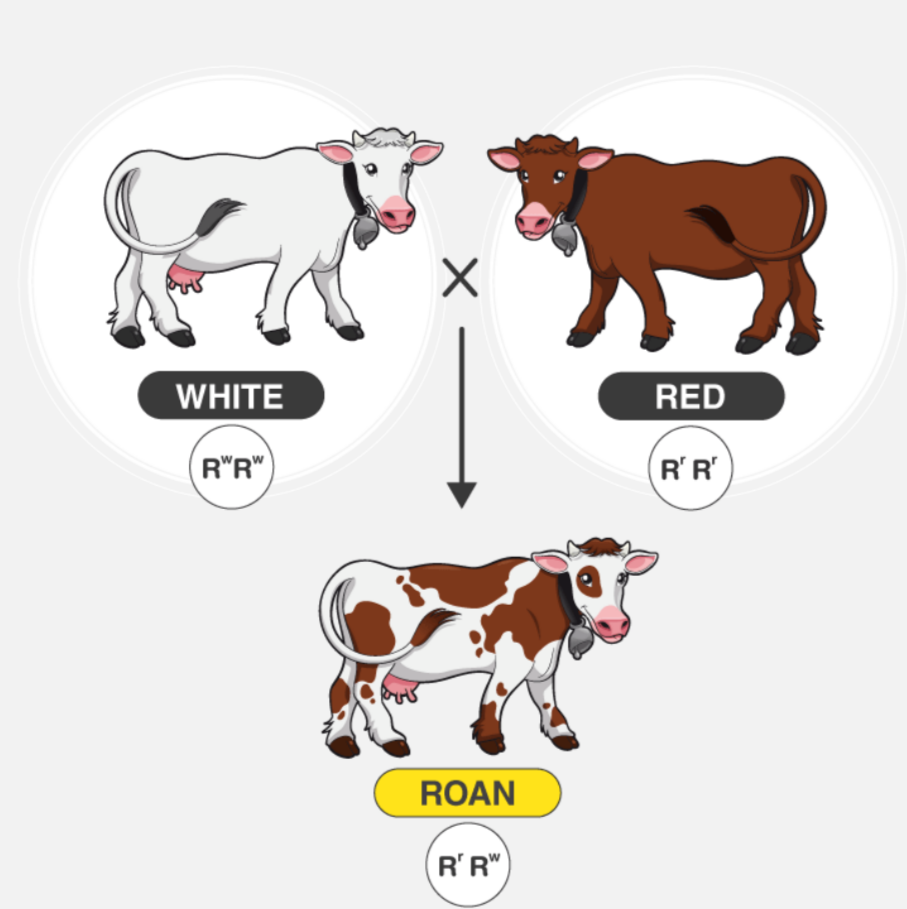
Key Features
- Both alleles active
- Heterozygote shows both traits simultaneously
- Phenotype ratio in F2 = 1:2:1 (like incomplete dominance but expression differs)
Example: Coat colour in cattle (Roan)
- Red (RR) × White (WW)
- F1: Roan (RW) – red and white patches both visible
- Both alleles express independently
Difference between incomplete dominance vs codominance
| Feature | Incomplete Dominance | Codominance |
|---|---|---|
| F1 phenotype | Intermediate | Shows both traits |
| Expression | Partial | Full |
| Example | Snapdragon | Roan cattle, MN blood group |
🌿 3. Multiple Alleles
A gene having more than two allelic forms in a population is called multiple alleles.
But an individual can carry only two at a time (diploid).
Key Features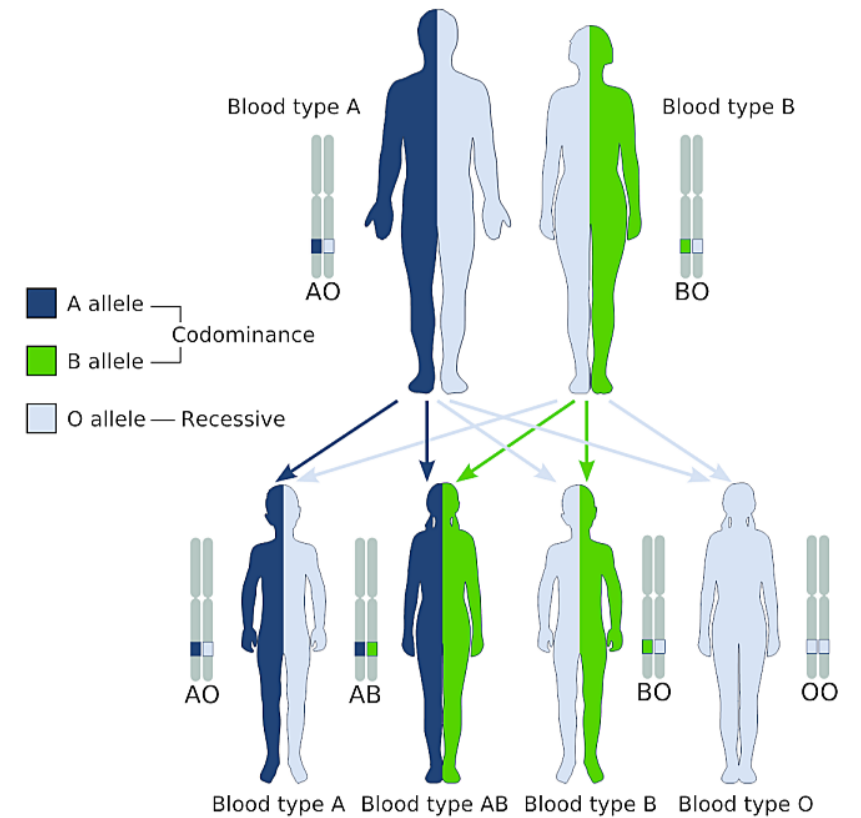
- Present in population, not in an individual
- Arise due to mutations over generations
- Maintain hierarchy of dominance
Example: ABO Blood group system
The gene I has three alleles:
- Iᴬ
- Iᴮ
- i
Hierarchy:
- Iᴬ and Iᴮ are codominant
- Both dominate over i
4. Inheritance of Blood Groups (ABO System)
ABO blood group is the best example of multiple alleles + codominance.
Genotypes and Phenotypes
| Phenotype (Blood Group) | Genotype(s) |
|---|---|
| A | IᴬIᴬ or Iᴬi |
| B | IᴮIᴮ or Iᴮi |
| AB | IᴬIᴮ |
| O | ii |
Important Points
- Iᴬ and Iᴮ are codominant → both express in AB blood group
- O group is recessive (ii)
- Shows no blending
- Blood group inheritance follows Mendel + deviations principles
🌱 5. Pleiotropy 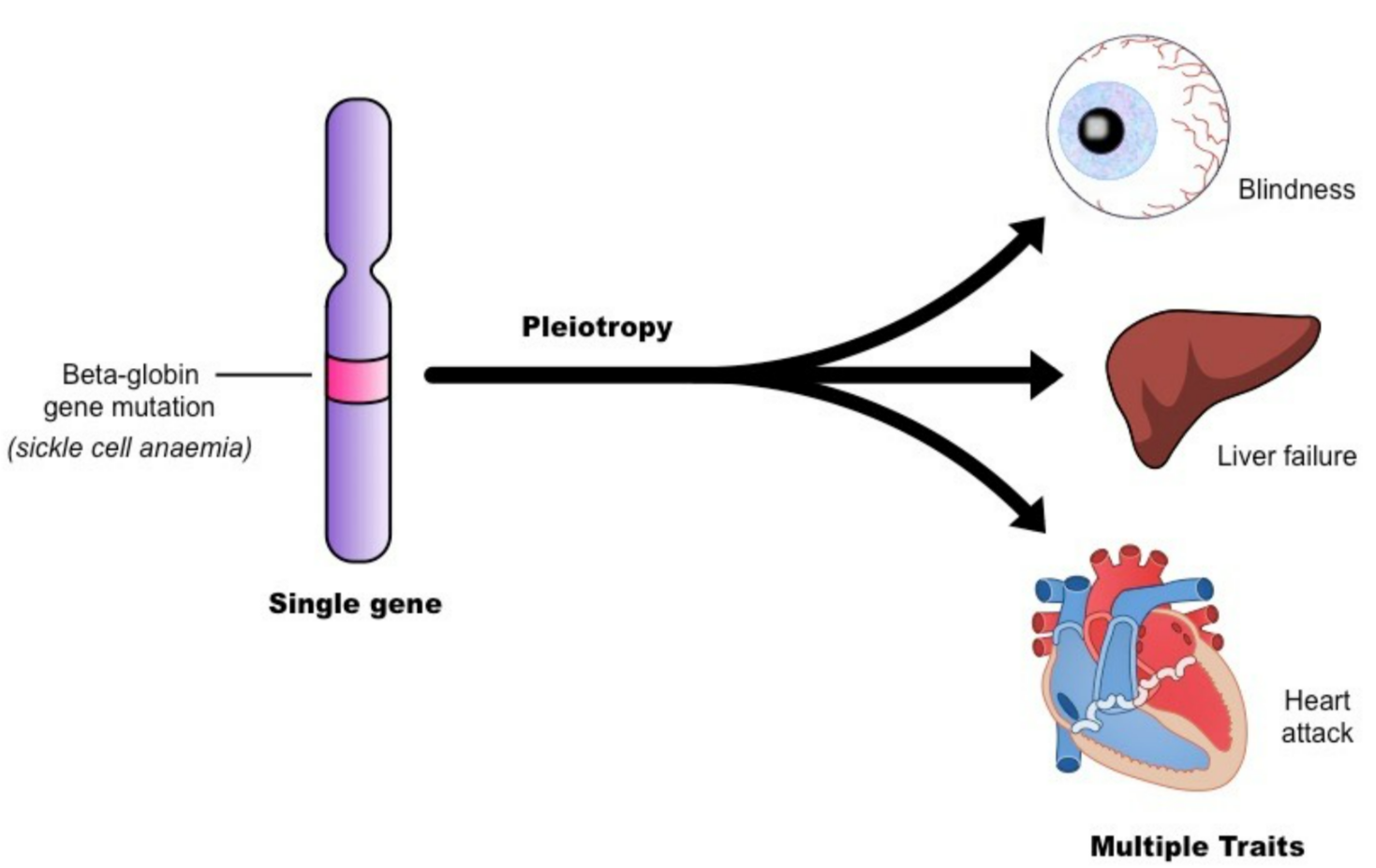
A single gene influencing multiple, unrelated traits is called pleiotropy.
Key Features
- One gene → affects several phenotypes
- Mutations produce multiple symptoms
- Very important in medical genetics
Examples
- Sickle cell anaemia gene (HbS):
- Affects RBC shape
- Causes anemia
- Increases malaria resistance
- PKU (Phenylketonuria):
- Single gene defect leads to mental retardation, light hair, skin issues
- Mendel’s pea plant example:
- A single gene controlling seed shape also influences leaf morphology and starch grain size
📘 Summary Table: Deviations at a Glance
| Concept | Meaning | Key Example | NEET Key |
|---|---|---|---|
| Incomplete Dominance | Neither allele fully dominant; F1 intermediate | Snapdragon flower colour | F2 1:2:1 phenotype |
| Codominance | Both alleles express fully | Roan cattle, MN blood group | No blending |
| Multiple Alleles | More than two alleles in population | ABO alleles | Only 2 alleles in each person |
| ABO Blood Group | Multiple alleles + codominance | A, B, AB, O | Iᴬ and Iᴮ codominant, i recessive |
| Pleiotropy | One gene affects many traits | Sickle cell, PKU | Single mutation → multiple symptoms |
🧾 Quick Recap
Incomplete dominance → F1 intermediate → Snapdragon → 1:2:1
Codominance → Both alleles fully expressed → Roan cattle
Multiple alleles → More than 2 alleles in population → ABO system
ABO blood group → Iᴬ, Iᴮ codominant, i recessive → AB = codominant
Pleiotropy → One gene, many traits → Sickle cell, PKU
All these are modifications to Mendel’s patterns
Polygenic Inheritance (Elementary Idea)
Some traits are not controlled by just one gene.
Instead, many genes together influence a single character.
Such traits show a wide range of variations, not just simple categories.
This type of inheritance is called polygenic inheritance.
🧬 What is Polygenic Inheritance?
Polygenic inheritance refers to a single trait controlled by two or more genes, each having a cumulative / additive effect.
Key points
- Also called quantitative inheritance
- Each gene contributes a small, equal, additive effect
- No dominance or recessive pattern like Mendel’s mono-gene traits
- Traits show continuous variation (many gradations)
- Environment also influences expression
Formula
More the number of genes involved → greater the variation seen in the population.
🌸 Classic Example: Human Skin Colour
Human skin colour is controlled by three genes (polygenes).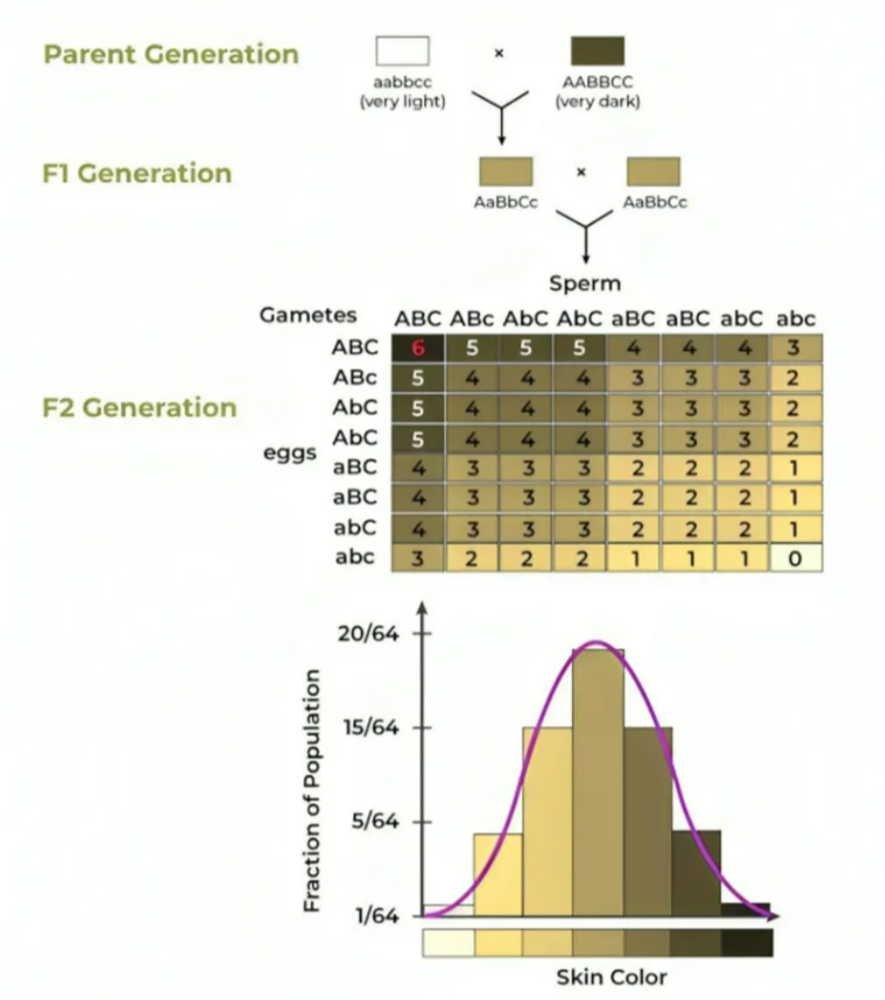
Each dominant allele contributes a small amount of pigment.
- More dominant alleles → darker skin
- More recessive alleles → lighter skin
- Most individuals fall in between → bell-shaped distribution
This is why skin colour shows a continuous range, not just “dark” or “light”.
🌾 Another Example: Kernel Colour in Wheat
Wheat grain colour shows polygenic inheritance.
More dominant alleles → deeper red colour.
F2 generation shows 1:4:6:4:1 ratio (a classic polygenic pattern).
🌈 Characteristics of Polygenic Traits
- Controlled by multiple genes
- Show quantitative differences, not qualitative
- Variation is continuous, not distinct
- Environment plays a major role
- No clear Mendelian ratios
- Often follow a normal distribution (bell curve)
🌼 Common Polygenic Traits in Humans
- Skin colour
- Height
- Body weight
- Intelligence
- Fingerprint patterns
- Eye colour (involving several genes)
📘 Summary Table
| Feature | Description |
|---|---|
| Meaning | Trait controlled by many genes |
| Also known as | Quantitative / multiple-gene inheritance |
| Variation | Continuous, wide-ranging |
| Dominance | Usually additive, not complete/recessive |
| F2 Pattern | Bell-shaped or 1:4:6:4:1 in some crosses |
| Examples | Skin colour, height, wheat kernel colour |
🧾 Quick Recap
Many genes → One trait
Each dominant allele adds a small effect
Produces continuous variation
No clear Mendelian ratios
Skin colour, height, wheat kernel colour
Often forms a bell-shaped curve
Chromosomal Theory of Inheritance
🌿 Introduction
After Mendel’s work was recognized, scientists began searching for the physical basis of heredity.
They observed that genes behave like chromosomes:
- both occur in pairs
- both segregate during gamete formation
 both assort independently
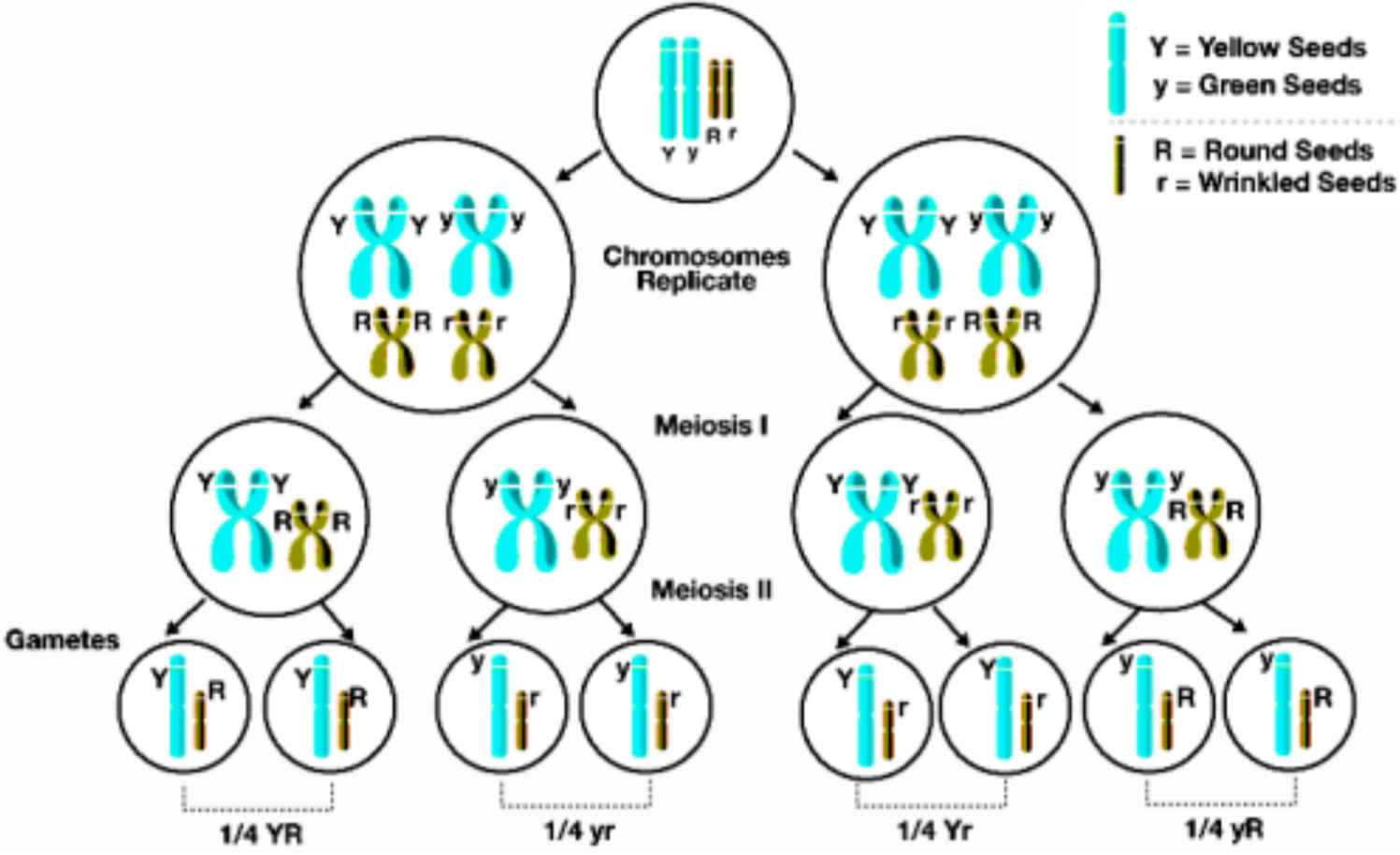 both assort independently
This led to the Chromosomal Theory of Inheritance.
🧬 What is the Chromosomal Theory of Inheritance?
Proposed by Walter Sutton and Theodor Boveri (1902–1903).
Core Idea
Genes are located on chromosomes, and the behaviour of chromosomes during meiosis explains Mendel’s laws.
Key Points
- Chromosomes occur in pairs just like Mendelian factors (genes)
- One chromosome of each pair comes from each parent
- During meiosis, homologous chromosomes separate
- This explains the law of segregation
- Independent movement of chromosome pairs explains independent assortment
So, chromosomes act as carriers of hereditary information.
🌼 Evidence Supporting the Theory
1. Parallel behaviour of chromosomes and genes
| Mendel’s Factors (Genes) | Chromosomes |
|---|---|
| Occur in pairs | Homologous chromosomes in pairs |
| Segregate during gamete formation | Homologous chromosomes separate in meiosis I |
| Assort independently | Chromosomes assort independently |
This matching behaviour supported the theory strongly.
2. Fertilization Restores Pairing
- Gametes are haploid
- Fusion during fertilisation restores diploid condition
→ Same behaviour is seen for chromosomes + genes
3. Morgan’s Work: Eye colour in Drosophila
Thomas Hunt Morgan proved that genes are present on chromosomes.
Why was Drosophila used?
- Short life cycle
- Many offspring
- Easily visible traits
- Only 4 pairs of chromosomes
Morgan discovered linkage, recombination, and studied sex-linked inheritance, giving strong evidence supporting the chromosomal theory.
Sutton’s Contribution
Sutton worked on grasshopper chromosomes and observed:
- Chromosomes occur in distinct pairs
- One paternal + one maternal
- They segregate during meiosis
He concluded:
Mendelian factors (genes) must lie on chromosomes
Chromosomes are the physical carriers of heredity
🟥 Chromosomal Theory Explained Mendel’s Laws
Law of Segregation
During meiosis I, homologous chromosomes separate → alleles separate.
Law of Independent Assortment
Each pair of chromosomes arranges independently → allele pairs assort independently.
🟩 Limitations / Modification After Morgan’s Work
While the chromosomal theory was correct, Morgan found that:
- Genes on the same chromosome do not always assort independently
- They show linkage
- Variation arises from crossing over
This expanded the theory by combining Mendelian genetics + cytology.
📘 Summary Table
| Topic | Key Point |
|---|---|
| Chromosomal Theory | Genes lie on chromosomes |
| Sutton & Boveri | Proposed the theory |
| Chromosomes vs Genes | Both show same behaviour |
| Evidence | Meiosis, fertilisation, Morgan’s work |
| Supported Laws | Segregation + independent assortment |
| Modified by | Morgan (linkage, recombination) |
🧾 Quick Recap
Genes are on chromosomes
Sutton & Boveri proposed theory
Chromosome behaviour matches Mendelian laws
Meiosis explains segregation + assortment
Morgan confirmed theory through Drosophila
Linkage and recombination refine the theory
Chromosomes and Genes
🌿 Introduction
Every living organism carries hereditary information inside its cells.
This information passes from parents to offspring and controls how traits appear.
Two key structures work together in this process: chromosomes and genes.
🧬 What Are Chromosomes?
Chromosomes are thread-like DNA–protein structures present in the nucleus.
They carry the complete genetic blueprint of an organism.
Key Features
- Made of DNA + histone proteins
- Appear clearly during cell division
- Present as homologous pairs in diploids
- Humans have 46 chromosomes (23 pairs)
- One set comes from mother and one from father
- Each chromosome carries many genes arranged linearly
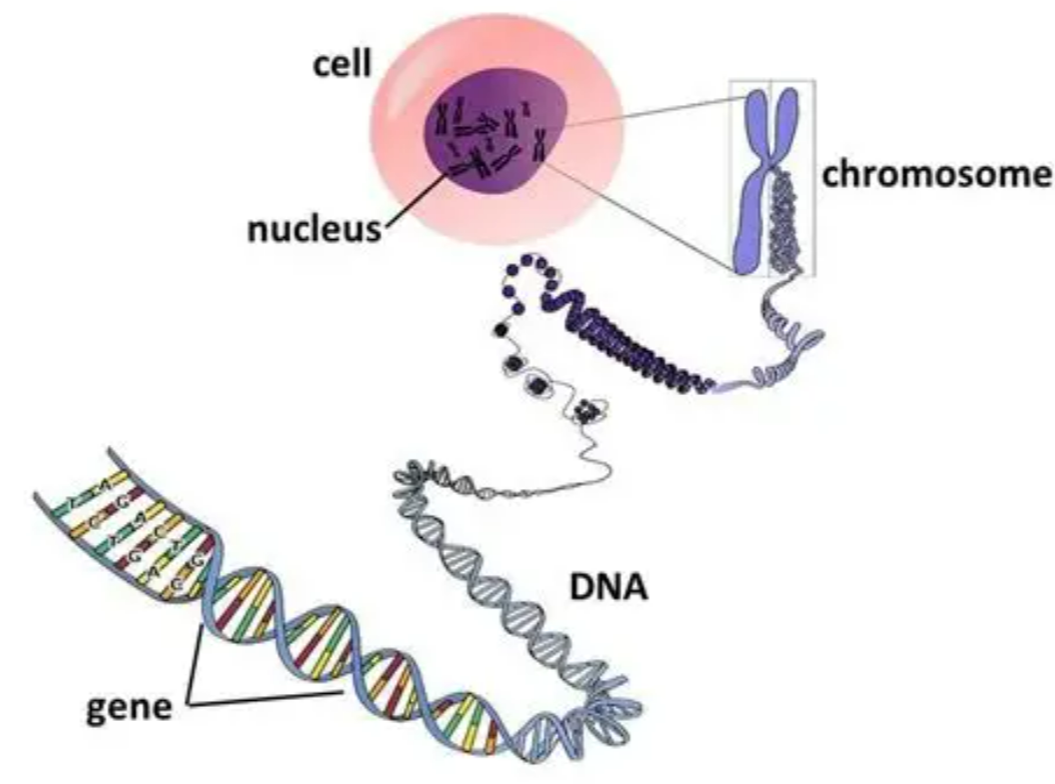
Composition
- DNA: stores genetic information
- Histones: help packing DNA into chromatin
- Non-histone proteins: regulatory role
- Together form chromatin fibres
Types of Chromosomes
- Autosomes: 22 pairs (non-sex chromosomes)
- Sex chromosomes: 1 pair (XX or XY)
🧬 What Are Genes?
Genes are specific segments of DNA that code for a particular trait or protein.
Key Features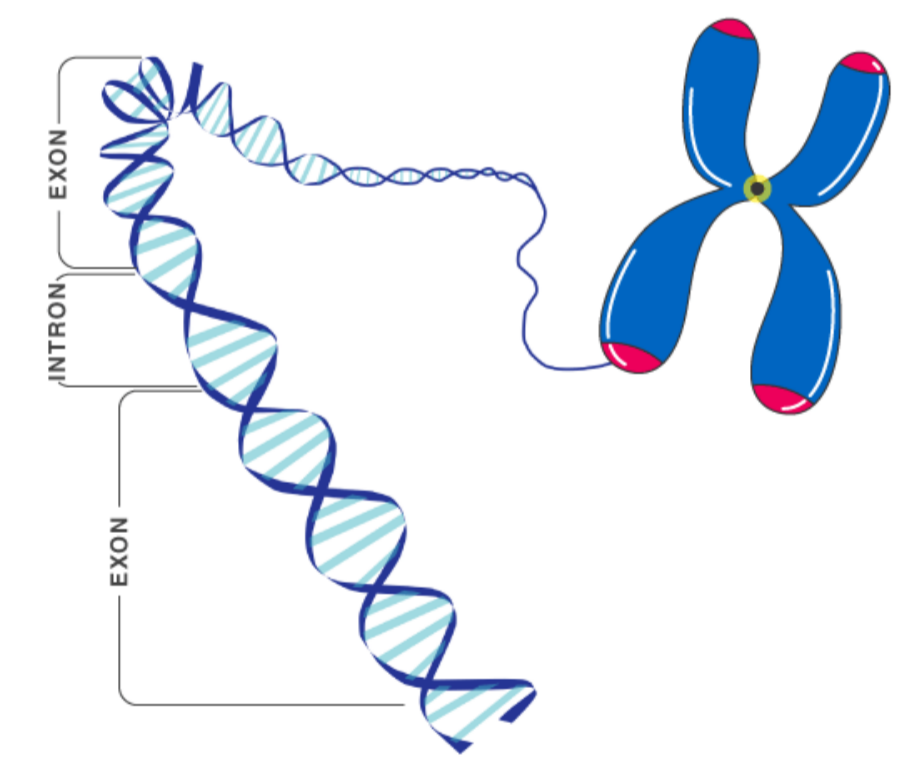
- Functional units of heredity
- Occupy fixed positions on chromosomes (called loci)
- Present in pairs (alleles) in diploid organisms
- Can be dominant, recessive, or show codominance/incomplete dominance
- Carry instructions for proteins, enzymes, hormones etc.
Alleles
Alleles are alternative forms of the same gene.
Example:
T = tallness
t = dwarfness
Alleles determine the variation within a trait.
🌿 Relationship Between Chromosomes and Genes
Genes do not float freely.
They are organized linearly on chromosomes – like beads on a string.
Important Points
- Chromosomes are the physical carriers of genes
- One chromosome carries hundreds to thousands of genes
- Homologous chromosome pairs carry the same set of genes
- During meiosis, chromosomes separate → genes segregate too
- Independent movement of chromosomes → independent assortment of genes
- Crossing over mixes genes between homologous chromosomes and creates variation
This relationship forms the foundation of Mendelian and modern genetics.
🌼 Chromosome-Gene Parallelism
| Chromosomes | Genes |
|---|---|
| Occur in pairs | Occur in allelic pairs |
| Separate during meiosis I | Alleles segregate |
| Assort independently | Alleles assort independently |
| One from each parent | One allele from each parent |
This parallel behaviour is the reason Sutton and Boveri proposed the Chromosomal Theory of Inheritance.
🌾 How Chromosomes Explain Mendel’s Laws
Law of Segregation
Homologous chromosomes separate in meiosis → alleles separate.
Law of Independent Assortment
Each chromosome pair aligns independently → allelic pairs assort independently.
🌸 Gene Location and Mapping
Because genes lie on chromosomes, their position can be mapped using:
- Crossing over data
- Recombination frequency
This led to the concept of linkage and gene mapping by Morgan and Sturtevant.
📘 Summary Table
| Topic | Key Idea |
|---|---|
| Chromosomes | DNA–protein structures carrying genes |
| Genes | Units of heredity controlling traits |
| Relationship | Genes arranged linearly on chromosomes |
| Evidence | Meiosis, fertilization, Morgan’s experiments |
| Importance | Basis of heredity and variation |
🧾 Quick Recap
Chromosomes = DNA carriers
Genes = heredity units on chromosomes
Genes arranged linearly on chromosomes
Alleles are alternative forms of genes
Chromosome behaviour mirrors Mendel’s laws
Meiosis explains segregation + assortment
Chromosomes prove the physical basis of inheritance
Sex Determination
🌿 Introduction
Sex determination is the mechanism by which an organism develops as male or female.
It involves genetic and chromosomal factors and, in humans, also sexual differentiation, which leads to development of internal genitalia, external genitalia, secondary sexual characters (body hair, breasts, etc.).
🧬 Sexual Differentiation in Humans
Definition:
“Sexual Differentiation in Humans is the process of development of sex differences in humans.”
Key Points
- Leads to development of different genitalia, internal genital tracts, body hair, breasts, and secondary sexual traits
- Controlled by sex chromosomes (X and Y)
- Begins with XY sex-determination system
- At early embryonic stage, both sexes have mesonephric (Wolffian) ducts and paramesonephric (Müllerian) ducts
- Phenotypic differences appear later depending on presence or absence of Y chromosome
🌾 Sex Determination in Humans (XY System)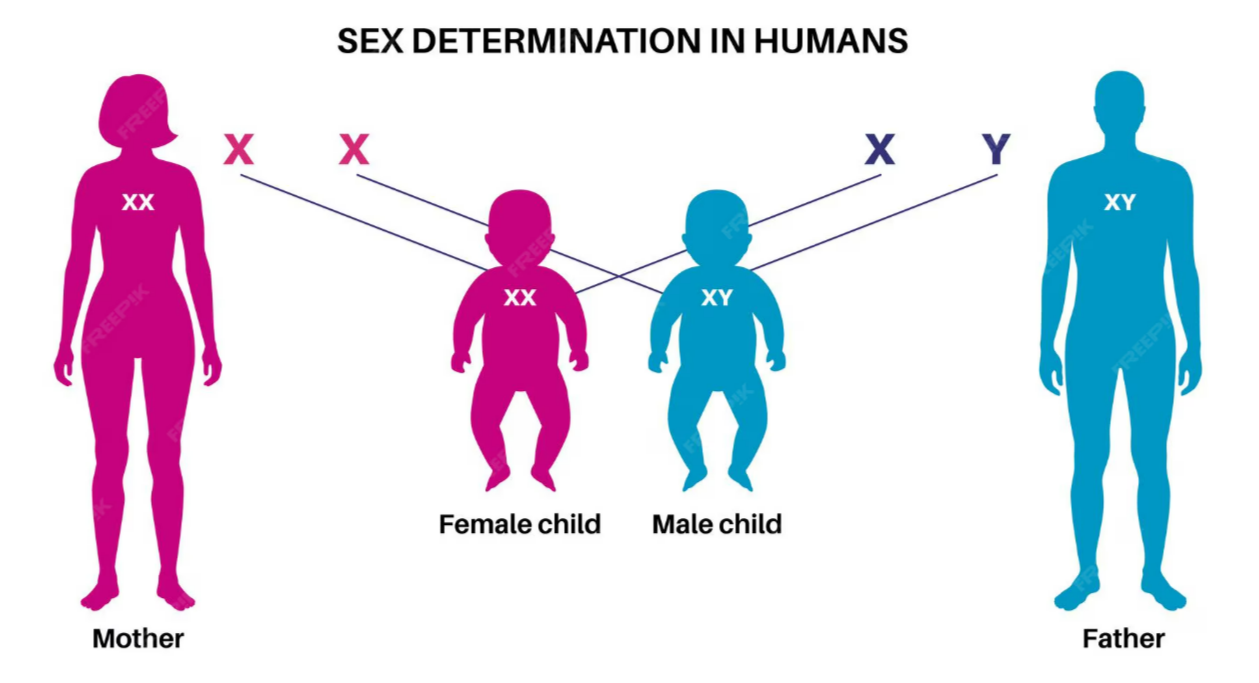
Chromosomal Basis
- Humans have 46 chromosomes (23 pairs)
- 22 pairs → Autosomes (same in both sexes)
- 1 pair → Sex chromosomes
- Female: XX
- Male: XY
Gamete Formation
- Ovum always carries X chromosome
- Sperm can carry X or Y → 50% chance for either sex at fertilization
Determination of Sex
- XX zygote → Female
- XY zygote → Male
Key Point: In humans, sex of child is determined by sperm, not ovum.
🧬 Sexual Differentiation Process (Human Embryo)
- Early embryo → mesonephric and paramesonephric ducts present in both sexes
- Y chromosome → contains SRY gene
- Produces testis-determining factor (TDF)
- Initiates testis development → testosterone → male genitalia
- Absence of Y → ovaries develop → female genitalia
- Secondary sexual characters develop later during puberty
 Absence of Y → ovaries develop → female genitalia
Sex Determination in Birds (ZW System)
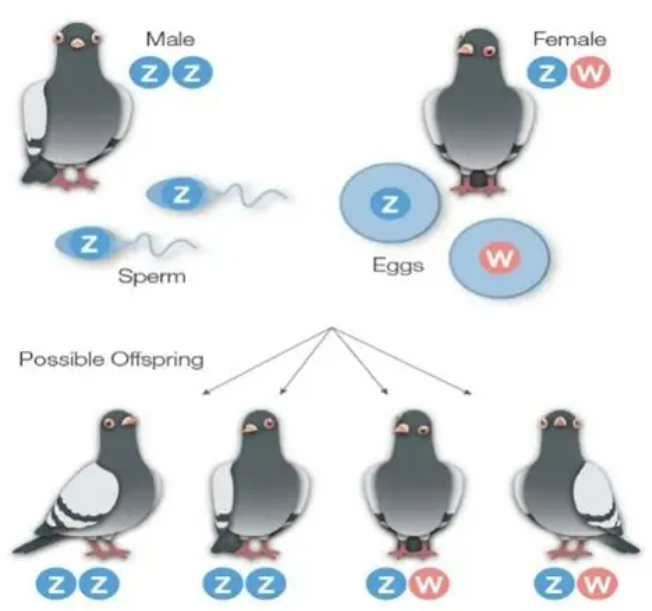
- Opposite to humans: female is heterogametic
- Male → ZZ (homogametic)
- Female → ZW (heterogametic)
- Fertilization depends on egg chromosome, not sperm
- Examples: Chickens, pigeons, ducks
Key Difference: In birds, sex is determined by female gamete.
Sex Determination in Honey Bees (Haplodiploid System)
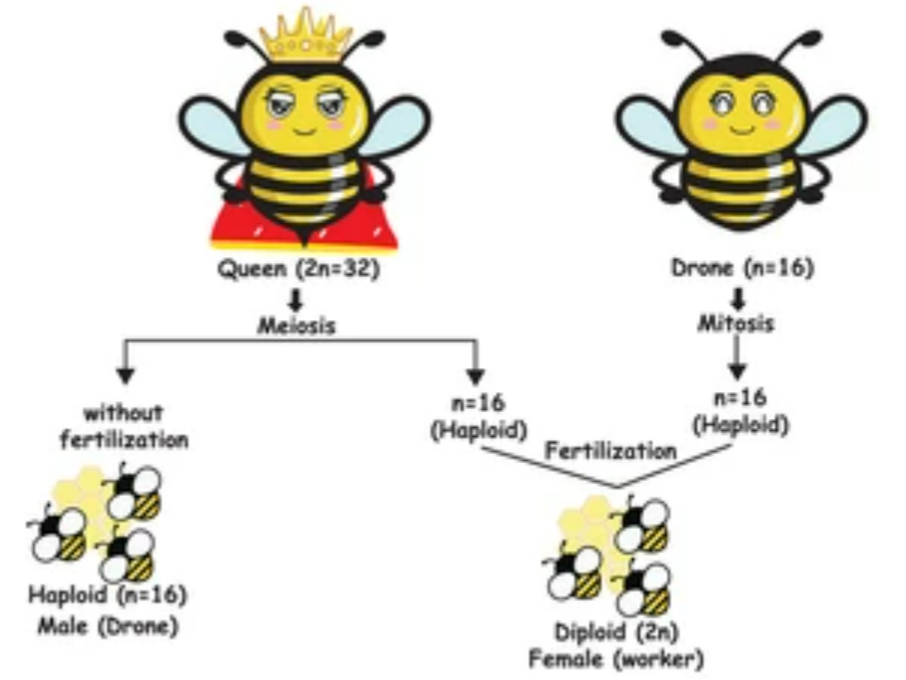
- Haplodiploidy = sex depends on ploidy
- Diploid (fertilized egg) → Female (worker or queen)
- Haploid (unfertilized egg) → Male (drone)
- Queen controls fertilization → fertilized eggs → female
- Unfertilized eggs → males
Key Feature: No sex chromosomes; genetic content determines sex.
📘 Summary Table: Sex Determination in Different Organisms
| Organism | System | Male | Female | Key Feature |
|---|---|---|---|---|
| Humans | XY | XY | XX | Male heterogametic; sex determined by sperm |
| Birds | ZW | ZZ | ZW | Female heterogametic; sex determined by egg |
| Honey Bee | Haplodiploid | Haploid | Diploid | Male from unfertilized, female from fertilized eggs |
🧾 Quick Recap
Humans → XY → Male = XY, Female = XX → sperm determines sex
Birds → ZW → Male = ZZ, Female = ZW → egg determines sex
Honey Bees → Haplodiploid → Diploid = female, Haploid = male
Sexual differentiation → development of genitalia, ducts, secondary sexual traits
SRY gene → testis determining factor → male development
Linkage and Crossing Over
🌿 Introduction
Mendel’s law of independent assortment states that different traits assort independently.
However, some traits do not follow this law because their genes are located on the same chromosome.
Such genes are called linked genes, and their behavior led to the discovery of linkage and crossing over.
🧬 1. Linkage
Definition:
“Linkage is the tendency of genes located on the same chromosome to be inherited together.”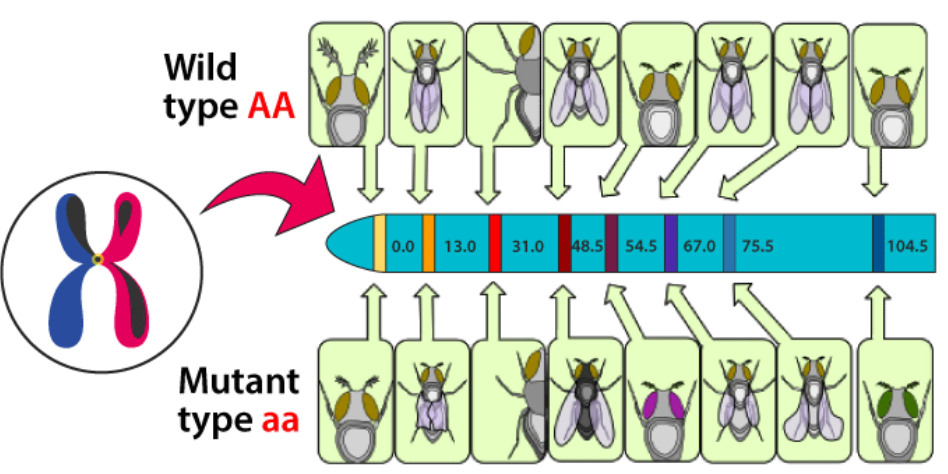
Key Features
- Genes present on the same chromosome → inherited together
- Do not assort independently (violate Mendel’s law of independent assortment)
- Can be complete or incomplete:
- Complete linkage → genes very close; no crossing over → inherited together
- Incomplete linkage → genes separated by some distance → crossing over may occur
- Example (Classic): Drosophila body colour (b) and wing shape (vg) genes are linked on the same chromosome → often appear together in offspring
🌿 2. Crossing Over
Definition:
“Crossing over is the exchange of chromosomal segments between homologous chromosomes during meiosis, resulting in recombination of alleles.”
Key Points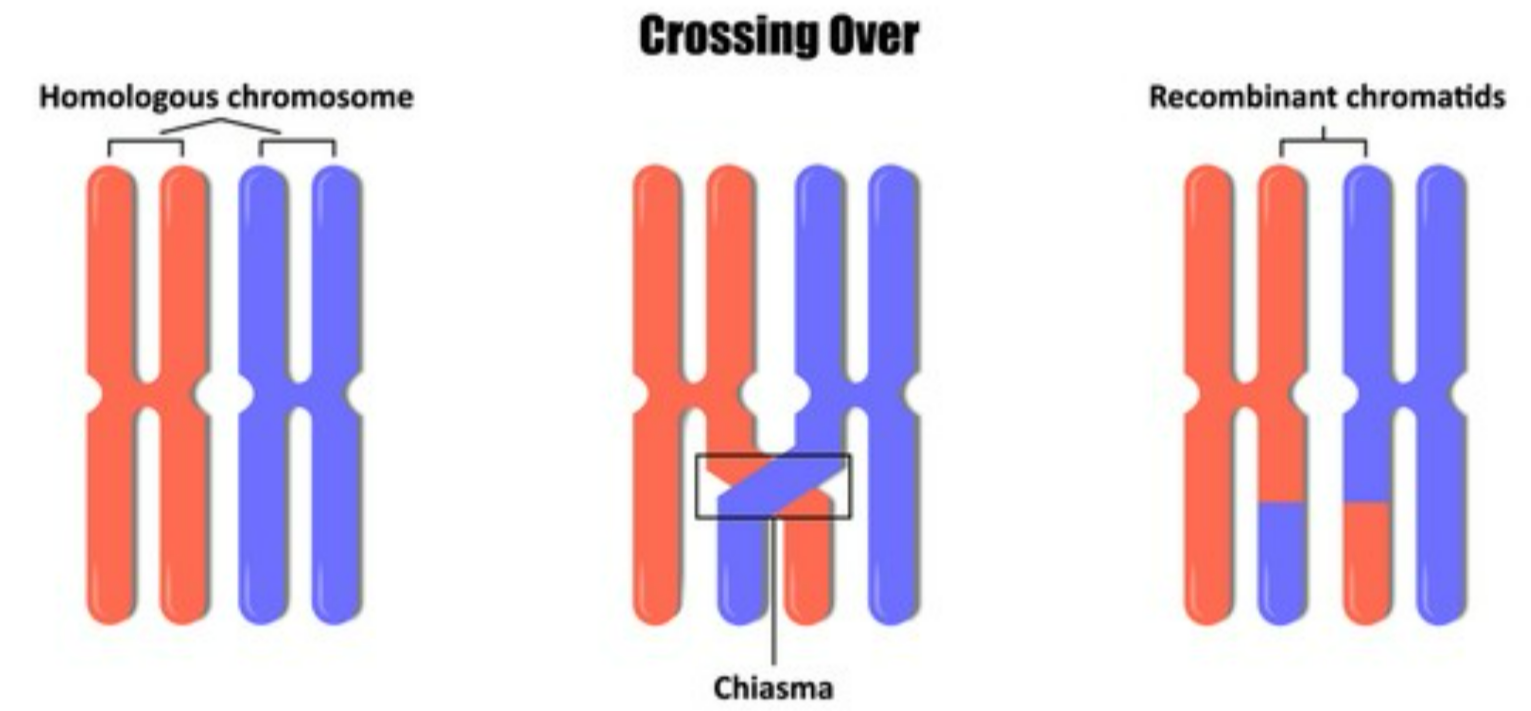
- Occurs during Prophase I of meiosis (pachytene stage)
- Produces new allele combinations → increases genetic variation
- Genes far apart → higher chance of crossing over
- Genes close together → lower chance of crossing over
- Example: Drosophila experiment: linked genes body colour (b) and wing shape (vg) → F2 generation shows parental + recombinant combinations
- Recombinant frequency = crossing over frequency
🌸 3. Types of Linkage
| Type | Description | Result in Offspring |
|---|---|---|
| Complete linkage | Genes very close on same chromosome | Only parental types appear; no recombinants |
| Incomplete linkage | Genes moderately apart | Both parental and recombinant types appear |
| Sex-linked linkage | Genes on sex chromosome (X or Y) | Traits show sex-linked inheritance patterns |
🌾 4. Recombination and Map Units
- Recombination frequency (RF) = (Number of recombinant offspring ÷ Total offspring) × 100
- RF gives measure of distance between genes on chromosome
- 1% recombination = 1 centiMorgan (cM)
- Example: If 20% offspring show recombination → genes are 20 cM apart
🌼 5. Key Differences Between Linked and Unlinked Genes
| Feature | Linked Genes | Unlinked Genes |
|---|---|---|
| Location | Same chromosome | Different chromosomes |
| Inheritance | Often inherited together | Assort independently |
| Mendel’s law | Violate independent assortment | Follow independent assortment |
| Recombination | Possible via crossing over | No need for recombination |
🧬 6. Significance of Linkage and Crossing Over
- Explains deviation from Mendelian ratios
- Creates genetic variation in populations
- Basis for gene mapping and chromosomal mapping in genetics research
- Important in evolutionary studies
📘 Summary Table
| Concept | Key Point | Example |
|---|---|---|
| Linkage | Genes on same chromosome → inherited together | Drosophila body colour & wing shape |
| Complete linkage | Very close genes; no recombination | Parental types only |
| Incomplete linkage | Genes moderately apart; recombination occurs | Parental + recombinant types |
| Crossing over | Exchange of segments between homologous chromosomes | Recombinant offspring |
| Recombination frequency | % offspring showing recombination | 1% = 1 cM |
| Sex-linked linkage | Genes on X or Y chromosome | X-linked eye colour in Drosophila |
🧾 Quick Recap
Linked genes → same chromosome → inherited together
Complete linkage → no recombination
Incomplete linkage → recombination occurs
Crossing over → exchange between homologous chromosomes → new allele combinations
Recombination frequency → distance between genes → 1% = 1 cM
Key examples → Drosophila body colour & wing shape
Sex-Linked Inheritance
🌿 Introduction
Some traits are controlled by genes present on sex chromosomes.
These traits show different patterns of inheritance in males and females.
Such inheritance is called sex-linked inheritance.
🧬 What is Sex-Linked Inheritance?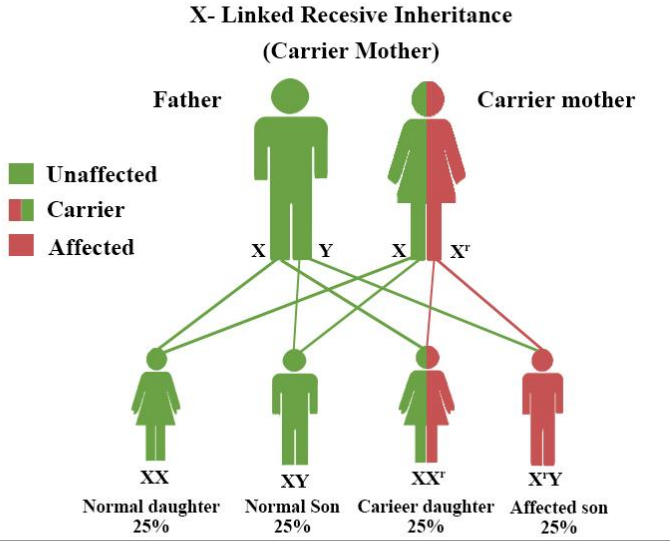
Definition:
“Sex-linked inheritance refers to the transmission of genes located on sex chromosomes (X or Y) from parents to offspring.”
Key Points
- Most sex-linked traits are X-linked (on X chromosome)
- Y-linked traits are rare and affect only males
- Males are hemizygous for X-linked genes (only one X) → express the trait even if recessive
- Females are homozygous or heterozygous → recessive traits may be hidden
🌿 Important Terms
| Term | Meaning |
|---|---|
| Hemizygous | Male has only one X chromosome → expresses recessive trait if present |
| Carrier | Female heterozygote (XᴺXⁿ) → carries gene but doesn’t express trait |
| X-linked | Gene located on X chromosome |
| Y-linked | Gene located on Y chromosome |
🧬 1. Haemophilia (Classic Example)
Definition: A blood clotting disorder caused by a recessive gene on X chromosome, leading to prolonged bleeding.
Genetics
- Gene symbol: Xʰ (haemophilia), Xᴴ (normal)
- Male genotype: XʰY → expresses haemophilia
- Female genotype: XʰXᴴ → carrier; XʰXʰ → affected
Inheritance Pattern
| Parent Genotype | Offspring Outcome |
|---|---|
| Carrier female (XᴴXʰ) × Normal male (XᴴY) | 25% daughters carrier, 25% daughters normal, 25% sons normal, 25% sons affected |
Key Points
- Mostly males affected
- Female can be carrier
- Inheritance follows X-linked recessive pattern
🧬 2. Colour Blindness (Red-Green)
Definition: Inability to distinguish between red and green due to defective photopigments coded by recessive X-linked gene.
Genetics
- Gene symbol: Xᶜ (colour blind), Xᴺ (normal)
- Male: XᶜY → affected
- Female: XᶜXᴺ → carrier; XᶜXᶜ → affected
Inheritance Pattern
| Parent Genotype | Offspring Outcome |
|---|---|
| Carrier female (XᴺXᶜ) × Normal male (XᴺY) | 25% daughters carrier, 25% daughters normal, 25% sons normal, 25% sons affected |
Key Points
- Red–green colour blindness is X-linked recessive
- Males affected more frequently than females
- Carrier females may pass trait to 50% of sons
🌾 X-Linked vs Y-Linked Traits
| Feature | X-Linked | Y-Linked |
|---|---|---|
| Chromosome | X | Y |
| Expressed in males | Yes (hemizygous) | Always |
| Expressed in females | Only if homozygous | Never |
| Example | Haemophilia, Colour blindness | Male fertility genes |
📘 Quick Summary Table: X-Linked Recessive Traits
| Trait | Gene | Male Genotype | Female Genotype | Carrier Female? | Notes |
|---|---|---|---|---|---|
| Haemophilia | Xʰ | XʰY | XʰXʰ | XᴴXʰ | Bleeding disorder |
| Colour Blindness | Xᶜ | XᶜY | XᶜXᶜ | XᴺXᶜ | Red–green defect |
🧾 Quick Recap
Sex-linked → genes on X or Y
Most traits X-linked recessive → males affected, females carriers
Hemizygous males → express recessive trait
Haemophilia → X-linked recessive, clotting disorder
Colour blindness → X-linked recessive, red–green defect
Carrier female → 50% chance to pass gene to sons
Mendelian Disorders in Humans: Thalassemia
🌿 Introduction
Mendelian disorders are genetic diseases caused by mutations in a single gene, following Mendel’s inheritance patterns (dominant or recessive).
Thalassemia is a classic autosomal recessive disorder affecting haemoglobin synthesis.
🧬 1. What is Thalassemia?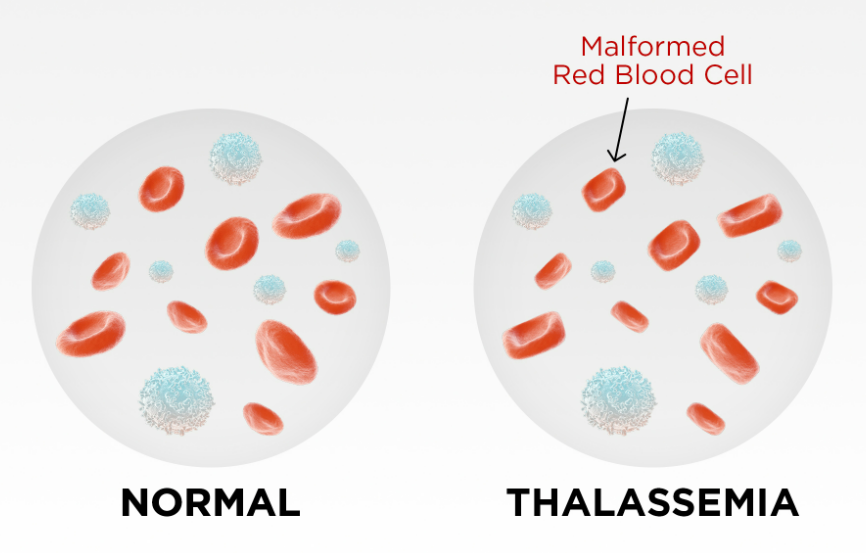
Definition:
“Thalassemia is an inherited blood disorder characterized by reduced or absent synthesis of one of the globin chains of haemoglobin, leading to anaemia.”
Key Points
- Caused by mutations in globin genes (α-globin or β-globin)
- Follows Mendelian autosomal recessive inheritance
- Results in abnormal haemoglobin, fragile RBCs, and inefficient oxygen transport
🌾 Types of Thalassemia
| Type | Gene Affected | Effect | Clinical Severity |
|---|---|---|---|
| α-Thalassemia | α-globin gene | Reduced/absent α-globin chains | Mild to severe |
| β-Thalassemia | β-globin gene | Reduced/absent β-globin chains | Mild (minor) → Severe (major / Cooley’s anemia) |
🧬 2. Genetics of Thalassemia
- Autosomal recessive disorder → both alleles must be defective for full-blown disease
- Heterozygous individuals → carriers (thalassemia minor, usually asymptomatic)
- Homozygous individuals → thalassemia major, severe anemia
Example (β-Thalassemia)
- Normal allele: B (β-globin normal)
- Mutant allele: b (β-thalassemia)
| Genotype | Phenotype |
|---|---|
| BB | Normal |
| Bb | Carrier (minor, mild anemia) |
| bb | Affected (major, severe anemia) |
Carrier parents → 25% chance of affected child, 50% carrier, 25% normal (classic Mendelian 1:2:1 ratio)
🌾 3. Symptoms of Thalassemia
- Severe anaemia (pale, fatigue)
- Jaundice
- Enlarged liver and spleen (hepatosplenomegaly)
- Bone deformities due to marrow expansion
- Growth retardation
- Frequent blood transfusions required for β-thalassemia major
🌸 4. Diagnosis
- Blood tests: low haemoglobin, microcytic hypochromic RBCs
- Haemoglobin electrophoresis: identifies abnormal Hb types
- Genetic testing: detects carriers and mutations
🌼 5. Treatment and Management
- Blood transfusions (regular for severe cases)
- Iron chelation therapy to prevent iron overload
- Bone marrow / stem cell transplantation → potential cure
- Genetic counseling → important for carrier couples
📘 Summary Table
| Feature | Thalassemia |
|---|---|
| Type | Autosomal recessive |
| Gene | α-globin or β-globin |
| Inheritance | Both alleles defective → affected; one defective → carrier |
| Symptoms | Anaemia, jaundice, hepatosplenomegaly, bone deformities |
| Diagnosis | Blood tests, Hb electrophoresis, genetic testing |
| Treatment | Transfusions, iron chelation, bone marrow transplant, genetic counseling |
🧾 Quick Recap
Mendelian disorder → caused by single gene mutation
Thalassemia → autosomal recessive → α or β globin genes
Heterozygous → carrier; homozygous → affected
Symptoms → anemia, jaundice, enlarged liver/spleen, bone deformities
Treatment → blood transfusion, iron chelation, stem cell transplant
Genetic counseling → prevents inheritance in future generations
Chromosomal Disorders in Humans
🌿 Introduction
Chromosomal disorders are caused by changes in the number or structure of chromosomes. These disorders often lead to developmental abnormalities, physical malformations, and sometimes mental retardation.
Key Points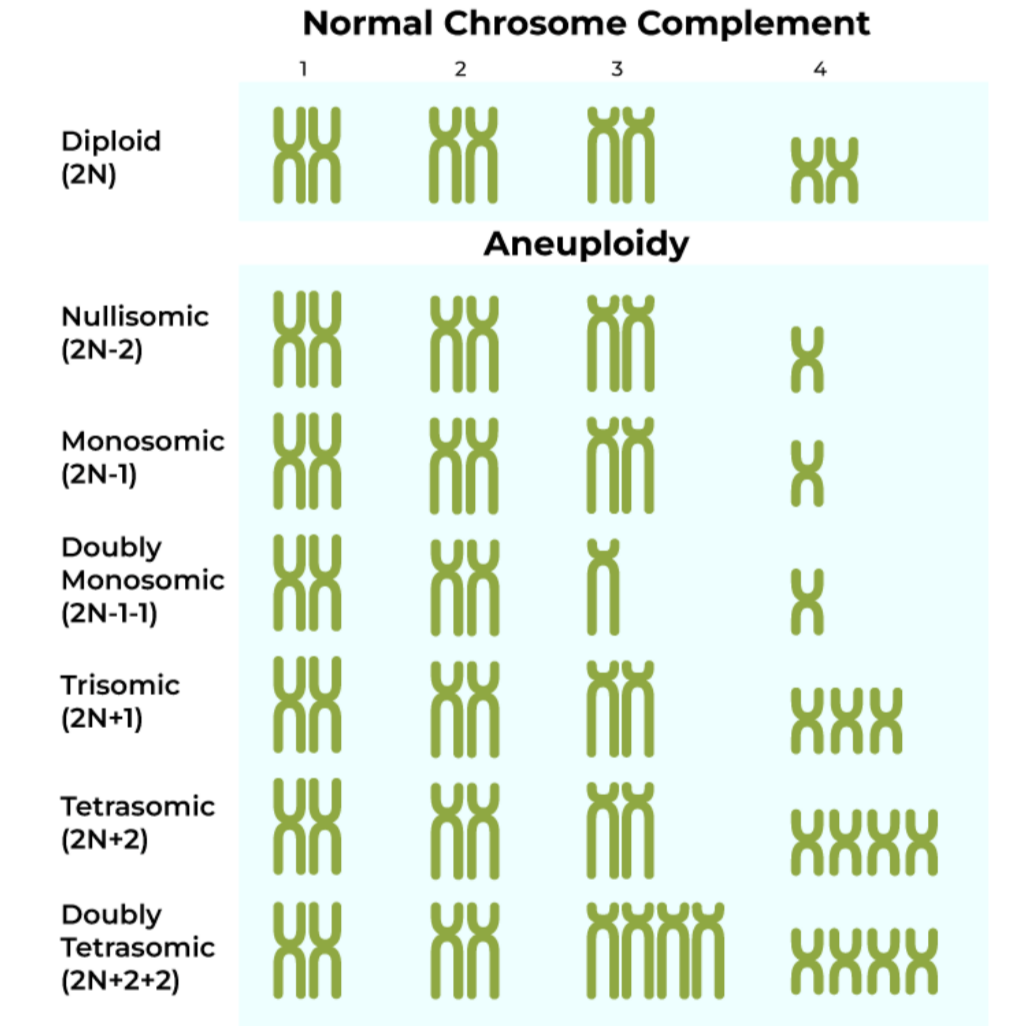
- Humans normally have 46 chromosomes (23 pairs)
- 22 pairs → Autosomes
- 1 pair → Sex chromosomes (X and Y)
- Any extra, missing, or structurally altered chromosome causes chromosomal disorders
- These disorders are not Mendelian because they involve whole chromosomes or large chromosomal segments
🧬 1. Types of Chromosomal Disorders
1.1 Numerical Abnormalities
Caused by change in the number of chromosomes
| Type | Description | Example |
|---|---|---|
| Aneuploidy | Gain or loss of a single chromosome | Down syndrome (Trisomy 21), Turner syndrome (Monosomy X) |
| Polyploidy | Gain of one or more complete sets of chromosomes | Triploidy (69 chromosomes) – usually lethal |
Examples:
- Down Syndrome (Trisomy 21): Extra chromosome 21 → 47 chromosomes. Symptoms: mental retardation, short stature, broad face, epicanthic folds, cardiac defects. Usually due to nondisjunction.
- Turner Syndrome (Monosomy X): Female with 45, X. Symptoms: short stature, webbed neck, sterile, underdeveloped ovaries.
- Klinefelter Syndrome (XXY): Male with 47, XXY. Symptoms: tall, sterile, small testes, female-like breasts (gynecomastia).
1.2 Structural Abnormalities
Caused by changes in chromosome structure
| Type | Description | Example |
|---|---|---|
| Deletion | Part of chromosome missing | Cri-du-chat syndrome (5p deletion) |
| Duplication | Part of chromosome repeated | Charcot-Marie-Tooth disease |
| Inversion | Segment of chromosome reversed | May be harmless or cause infertility |
| Translocation | Segment moved to another chromosome | Chronic myelogenous leukemia (Philadelphia chromosome) |
Example: Cri-du-chat Syndrome
- Deletion of short arm of chromosome 5
- Symptoms: high-pitched cry like a cat, mental retardation, microcephaly
🌿 2. Mechanism of Chromosomal Disorders
- Most numerical abnormalities occur due to nondisjunction during meiosis
- Structural abnormalities arise due to breakage, faulty recombination, or radiation/mutagen exposure
🌾 3. Diagnosis
- Karyotyping → visualizing metaphase chromosomes
- FISH (Fluorescent In Situ Hybridization) → detects microdeletions or translocations
- Prenatal diagnosis: Amniocentesis, Chorionic villus sampling (CVS)
📘 4. Examples of Common Chromosomal Disorders
| Disorder | Type | Chromosome Affected | Key Features |
|---|---|---|---|
| Down Syndrome | Numerical (trisomy) | 21 | Mental retardation, epicanthic folds, short stature |
| Turner Syndrome | Numerical (monosomy) | X | Short stature, webbed neck, sterile female |
| Klinefelter Syndrome | Numerical (extra X) | XXY | Tall, sterile male, gynecomastia |
| Cri-du-chat | Structural (deletion) | 5p | Cat-like cry, microcephaly, mental retardation |
| Chronic Myelogenous Leukemia | Structural (translocation) | 9;22 | Philadelphia chromosome, cancer |
🧾 Quick Recap
Chromosomal disorders → due to number or structure changes
Numerical → aneuploidy (trisomy/monosomy), polyploidy
Structural → deletion, duplication, inversion, translocation
Common examples → Down (21), Turner (X), Klinefelter (XXY), Cri-du-chat (5p), CML (9;22)
Mechanism → nondisjunction, chromosomal breakage
Diagnosis → karyotyping, FISH, prenatal tests
Common Chromosomal Disorders in Humans
🌿 Introduction
Chromosomal disorders are caused by changes in chromosome number or structure, leading to developmental, physical, and sometimes mental abnormalities. Three well-known disorders are Down’s Syndrome, Turner’s Syndrome, and Klinefelter’s Syndrome.
🧬 1. Down’s Syndrome (Trisomy 21)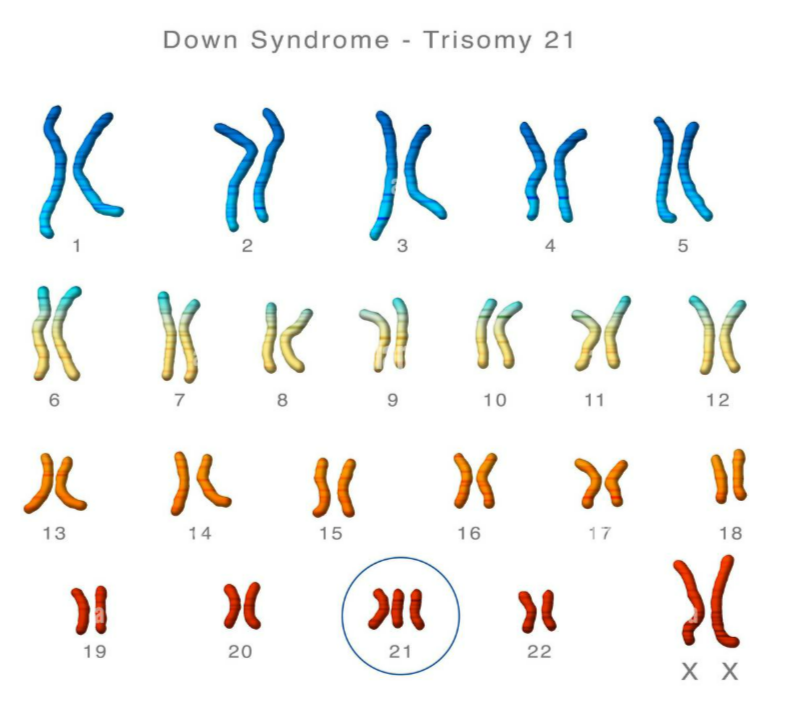
- Cause: Numerical abnormality: Extra copy of chromosome 21 → 47 chromosomes; usually due to nondisjunction during meiosis
- Karyotype: 47, +21
- Key Features:
- Mental retardation (mild to moderate)
- Short stature
- Epicanthic folds (skin fold over eyes)
- Flat face and small nose
- Simian crease (single transverse palmar crease)
- Heart defects (e.g., ventricular septal defect)
- Increased susceptibility to infections and leukemia
- Inheritance Pattern: Not inherited in typical Mendelian sense; mostly sporadic, risk increases with maternal age
🧬 2. Turner’s Syndrome (Monosomy X)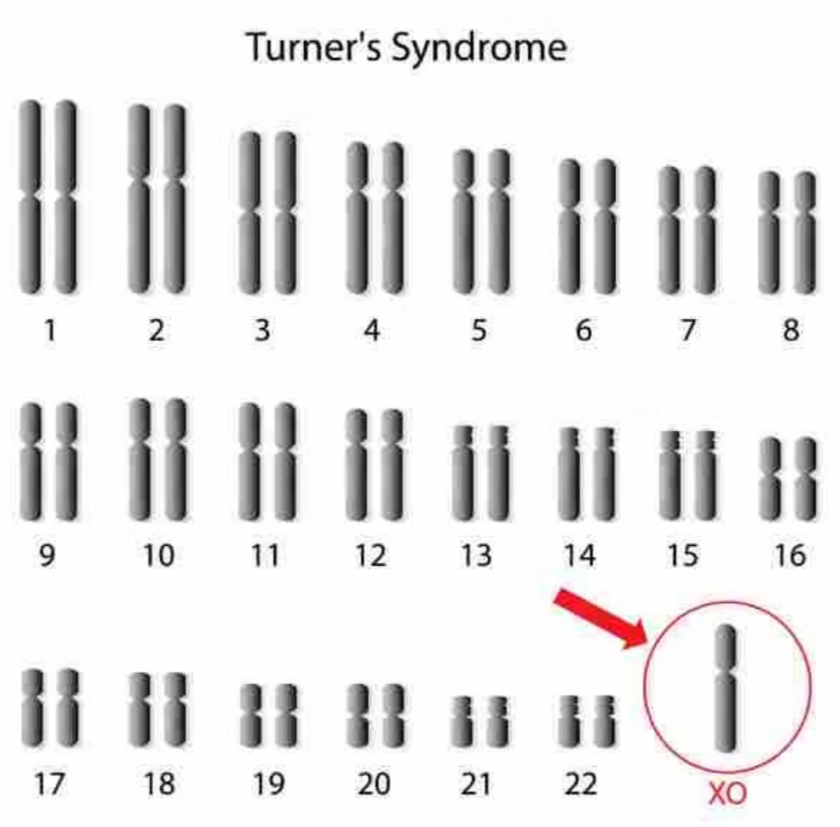
- Cause: Female has only one X chromosome → 45 chromosomes (45, X); no Y chromosome present → develops as phenotypic female
- Key Features:
- Short stature
- Webbed neck
- Broad chest with widely spaced nipples
- Underdeveloped ovaries → sterile
- Low hairline and sometimes cardiac anomalies
- Karyotype: 45, X
- Inheritance Pattern: Non-Mendelian; arises due to nondisjunction or chromosomal loss during gamete formation
🧬 3. Klinefelter’s Syndrome (XXY)
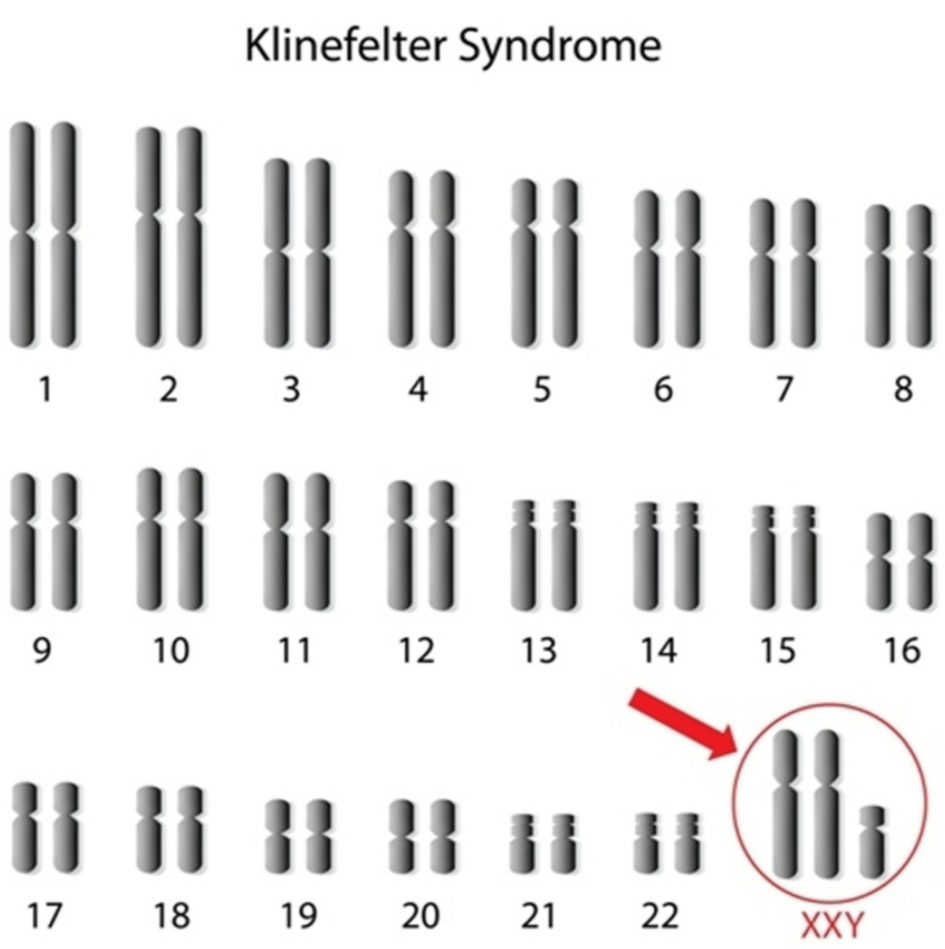
- Cause: Male has extra X chromosome → 47 chromosomes (47, XXY); occurs due to nondisjunction during meiosis
- Key Features:
- Tall stature
- Small testes → sterile
- Gynecomastia (female-like breasts)
- Reduced facial and body hair
- Learning difficulties may occur
- Karyotype: 47, XXY
- Inheritance Pattern: Non-Mendelian; arises sporadically due to meiotic errors
📘 Comparison Table
| Disorder | Chromosome | Sex | Key Features | Cause |
|---|---|---|---|---|
| Down’s Syndrome | Trisomy 21 | Male/Female | Mental retardation, short stature, epicanthic folds, flat face, heart defects | Nondisjunction (extra chromosome) |
| Turner’s Syndrome | Monosomy X (45, X) | Female | Short stature, webbed neck, sterile, broad chest | Nondisjunction / loss of X |
| Klinefelter’s Syndrome | XXY (47, XXY) | Male | Tall, small testes, sterile, gynecomastia | Nondisjunction (extra X) |
🧾 Quick Recap
Down’s → Trisomy 21 → 47 chromosomes → mental retardation, flat face, short stature
Turner’s → 45, X → female → sterile, webbed neck, short stature
Klinefelter’s → 47, XXY → male → tall, sterile, gynecomastia
All arise mainly due to nondisjunction during meiosis
Not classic Mendelian inheritance; sporadic chromosomal disorders