
Application of Biotechnology in Health and Agriculture
🌱 Introduction
Biotechnology uses genetically modified organisms (plants, animals, microbes) for industrial, medical, agricultural, and environmental purposes.
Applications include:
- Waste treatment
- Food processing
- Diagnostics and therapeutics
- Bioremediation
- Energy production
Core idea: Using biological systems to solve real-world problems and produce useful products.
🔬 Research Areas in Biotechnology
- Downstream processing: Removing contaminants from proteins or organic compounds.
- Catalyst selection: Choosing the best enzyme or microbial strain for a process.
- Optimizing conditions: Creating ideal environments for enzymes/microbes to maximize yield.
🌾 Biotechnology in Agriculture
Crop Improvement
- Creation of disease-free, high-yielding, genetically diverse crops.
- Tissue and cell culture: Regenerate plants under controlled conditions.
- Mutation breeding: Produces new varieties (rice, wheat, barley, vegetables).
Transgenic Crops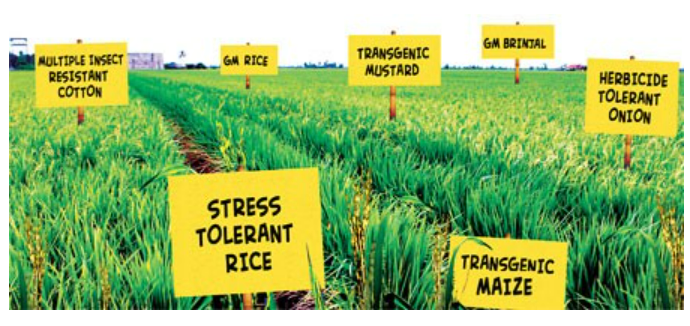
- GM brinjal, GM rice → pest-resistant, high-yield
- Transgenic mustard → improved oil content
- Herbicide-tolerant crops → selective weed removal
Biofertilizers & Biopesticides
- Replace chemical fertilizers/pesticides → reduce environmental hazards.
Biofuels
- Improves production of bio-diesel, bio-ethanol, bio-oil via fermentation and enzyme optimization.
Ornamental Plants
- Genetic engineering improves flowers, shrubs, and trees for aesthetics and disease resistance.
Summary: Biotechnology increases yield, disease resistance, and environmental sustainability in agriculture.
💊 Biotechnology in Medicine & Health
Recombinant DNA Technology
- Produces human insulin, growth hormones, clotting factors, vaccines.
- Example: Insulin for diabetes management.
Gene Therapy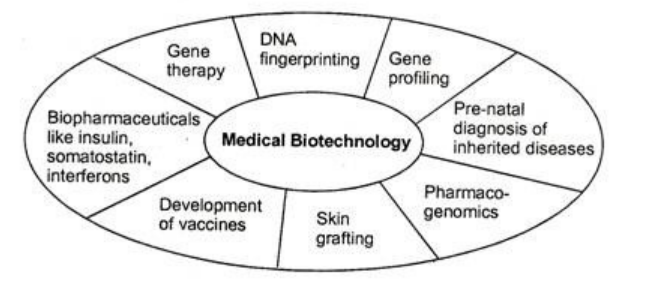
- Corrects defective genes causing hereditary diseases.
- Methods: Delivery of functional gene to replace defective gene; early intervention in embryos or children.
Diagnostics
- PCR: Amplifies pathogen DNA for detection.
- ELISA: Detects antigens/antibodies for disease identification.
- DNA fingerprinting & genetic testing: Paternity and forensic applications.
- Pharmacogenomics: Tailors medicine based on patient’s genetic makeup.
Vaccines
- Recombinant vaccines produced using genetically engineered microbes.
- Example: Hepatitis B vaccine produced in yeast cells.
Cancer, Heart Disease & Other Therapies
- Biotechnology aids in cancer treatment, liver, and heart disease therapies.
- Large molecules like monoclonal antibodies are produced using microbial or mammalian cell cultures.
Summary: Biotechnology revolutionizes healthcare via diagnosis, therapy, vaccines, and recombinant proteins.
🌍 Biotechnology in Environment
- Pollution Control: Genetically engineered microbes degrade pollutants → bioremediation.

- Phytoremediation: Plants remove xenobiotics from soil/water.
- Biofertilizers & Biopesticides: Reduce chemical fertilizer use → lower environmental toxicity.
- Bio-plastics: Environmentally friendly alternatives to non-degradable plastics.
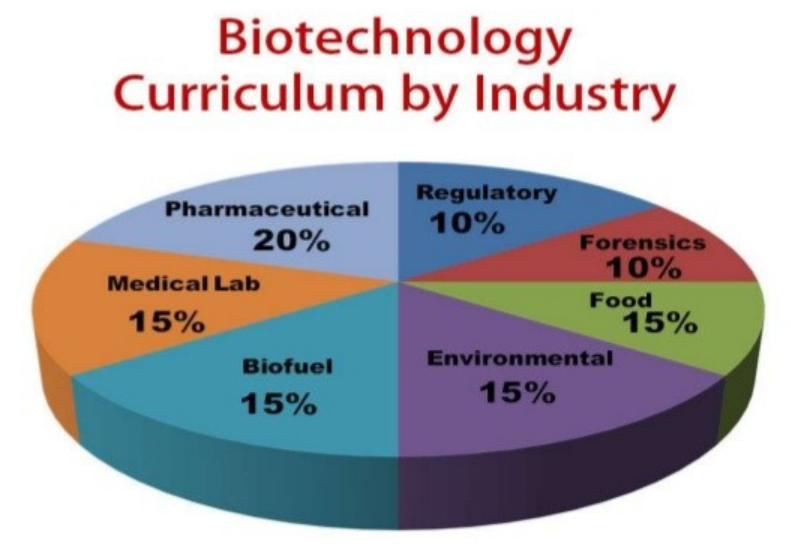
Overall Impact: Biotechnology contributes to sustainable agriculture, medicine, and environmental protection.
⚡ Role in Molecular Diagnosis
Early detection is crucial for effective treatment.
Techniques:
- PCR: Amplifies small DNA segments for detection
- Recombinant DNA technology: Identifies pathogens and defective genes
- ELISA: Detects antigens or antibodies, widely used in viral disease detection
Benefit: Rapid and precise diagnosis allows timely treatment and disease control.
📝 Quick Recap
| Area | Applications / Examples |
|---|---|
| Agriculture | Transgenic crops, biofertilizers, pest-resistant varieties, biofuels |
| Medicine & Health | Human insulin, vaccines, gene therapy, diagnostics, monoclonal antibodies |
| Environment | Bioremediation, bio-plastics, phytoremediation |
| Molecular Techniques | PCR, ELISA, DNA fingerprinting, recombinant DNA |
Genetically Modified Organisms (GMOs) & Bt Crops
🌱 What are GMOs?
Definition: Organisms whose genome has been artificially altered using biotechnology to express desired traits.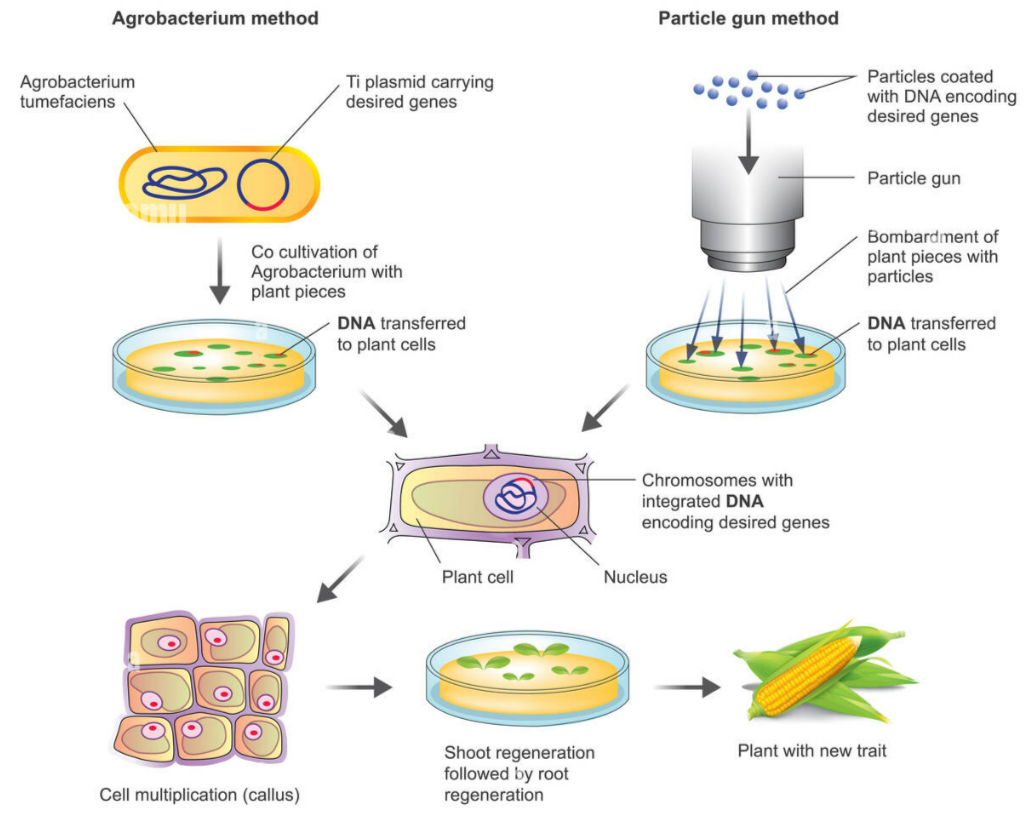
Includes: plants, animals, and microbes.
Purpose:
- Improve yield and quality
- Provide resistance to pests, diseases, and herbicides
- Enhance nutritional content
Example: Golden rice → enriched with Vitamin A; Bt cotton → pest-resistant cotton variety.
🔬 Bt Crops
Definition:
Bt crops are plants genetically engineered to express the Bacillus thuringiensis (Bt) toxin, a natural insecticide.
Bacillus thuringiensis (Bt):
- Soil bacterium that produces crystalline protein (Cry protein).
- Cry protein is toxic to specific insect pests when ingested, but safe for humans, animals, and beneficial insects.
Mechanism of Bt Toxin:
- Ingested by insect → binds to gut wall → creates pores → gut cells lyse → insect dies.
- Protects the plant from pests without using chemical insecticides.
Examples of Bt Crops:
| Crop | Target Pest |
|---|---|
| Bt cotton | Bollworm (Helicoverpa armigera) |
| Bt brinjal | Fruit and shoot borer |
| Bt maize | Stem borer and rootworm |
Advantages of Bt Crops:
- Reduces pesticide use → safer for farmers and environment
- Increases crop yield
- Cost-effective pest management
- Environmentally friendly → lowers chemical residues in soil and water
Concerns & Challenges:
- Resistance development in pests → requires integrated pest management
- Gene flow to wild relatives → ecological impact
- Allergenicity and food safety → requires rigorous testing
⚡ Quick Recap
Mechanism: Bt toxin ingested by insects → binds gut wall → kills pest
Examples: Bt cotton, Bt brinjal, Bt maize
Advantages: Less chemical pesticide, higher yield, eco-friendly
Concerns: Pest resistance, gene flow, allergenicity
Mnemonic: “B for Bollworm, T for Toxin” → Bt crops protect against insect pests naturally.
Transgenic Animals
🌱 What are Transgenic Animals?
Definition: Animals whose genome has been artificially altered by inserting foreign genes from another species to express desired traits.
Purpose:
- Study gene function and human diseases
- Produce therapeutic proteins (pharmaceuticals)
- Improve agricultural traits (growth, disease resistance)
These animals are created using recombinant DNA technology.
🔬 How Transgenic Animals are Produced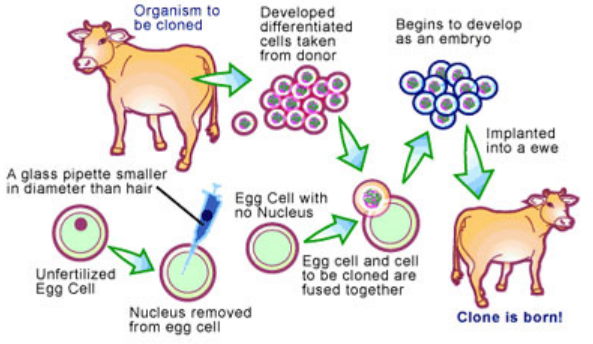
Gene Identification and Isolation:
- Identify the gene of interest from the donor organism.
- Clone the gene into a suitable vector.
Gene Insertion Methods:
- Microinjection: DNA injected into fertilized egg pronucleus.
- Retroviral Vectors: Viruses carrying the gene infect embryonic cells.
- Embryonic Stem (ES) Cell Method: Gene inserted into ES cells → incorporated into blastocyst → implanted in surrogate mother.
Selection and Breeding:
- Offspring are screened for presence and expression of foreign gene.
- Positive transgenic animals are bred to establish stable lines.
🧬 Applications of Transgenic Animals
1. In Medicine
| Purpose | Example |
|---|---|
| Production of therapeutic proteins | Insulin, clotting factors, antibodies from transgenic goats, cows, or sheep |
| Disease models | Mice expressing human genes for cancer, Alzheimer’s, cystic fibrosis |
| Vaccine development | Transgenic chickens producing antigens in eggs |
2. In Agriculture
| Purpose | Example |
|---|---|
| Faster growth / better meat | Transgenic salmon grows faster |
| Disease resistance | Animals resistant to viral or bacterial infections |
| Milk production | Transgenic cows producing human lactoferrin or lysozyme |
3. In Research
- Study gene function and regulation
- Xenotransplantation: Transgenic pigs for organ transplants to humans
⚡ Advantages of Transgenic Animals
- Large-scale production of therapeutic proteins
- Better understanding of human diseases
- Enhanced agricultural traits
- Reduced use of chemical drugs for animal health
⚠️ Concerns & Challenges
- Ethical issues: Animal welfare, genetic modifications
- Unintended effects: Immune reactions or health problems in animals
- Environmental risk: Escape of transgenic animals could impact ecosystems
⚡ Quick Recap
| Topic | Key Points |
|---|---|
| Transgenic Animals | Animals with foreign genes inserted for desired traits |
| Methods | Microinjection, Retroviral vectors, Embryonic stem cell method |
| Medical Uses | Therapeutic proteins, disease models, vaccine production |
| Agricultural Uses | Faster growth, disease resistance, enhanced milk/meat |
| Research | Gene function study, xenotransplantation |
| Advantages | Therapeutic protein production, better traits, disease study |
| Concerns | Ethics, immune/health risks, ecological impact |