
Principles and Process of Biotechnology: Genetic Engineering (Recombinant DNA Technology)
📌 Definition of Biotechnology
According to the European Federation of Biotechnology:
“The integration of natural sciences and organisms, cells, parts thereof, and molecular analogues for products and services.”
Key idea: Using living systems or components of living systems to develop products and solve problems.
🌱 Principles of Biotechnology
Modern biotechnology is based on two main techniques:
- Genetic Engineering (Recombinant DNA Technology)
- Alteration of DNA or RNA to introduce desired traits into host organisms.
- Changes the phenotype of the host.
- Microbial/Chemical Engineering Principles
- Maintaining sterile conditions for large-scale growth of microbes or eukaryotic cells.
- Production of enzymes, vaccines, antibiotics, and other biotechnological products.
💡 Conceptual Background of Genetic Engineering
Sexual reproduction introduces variation, whereas asexual reproduction preserves genetic information.
This concept led to gene isolation, transfer, and cloning without introducing unwanted genes.
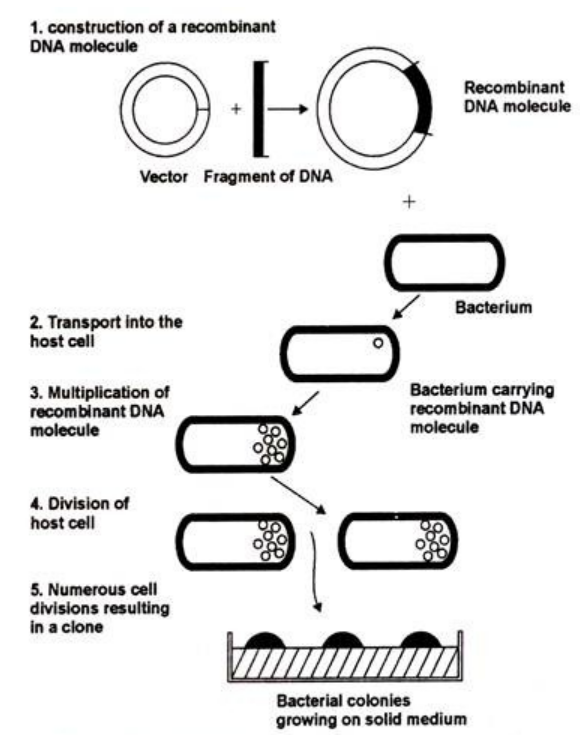
Example: 1972, Herbert Boyer and Stanley Cohen cut a plasmid DNA and isolated an antibiotic resistance gene using restriction enzymes and linked it to a plasmid via DNA ligase → first recombinant DNA molecule.
🛠 Tools of Recombinant DNA Technology
1. Restriction Enzymes
- Discovered in 1963 to protect bacteria from bacteriophages.
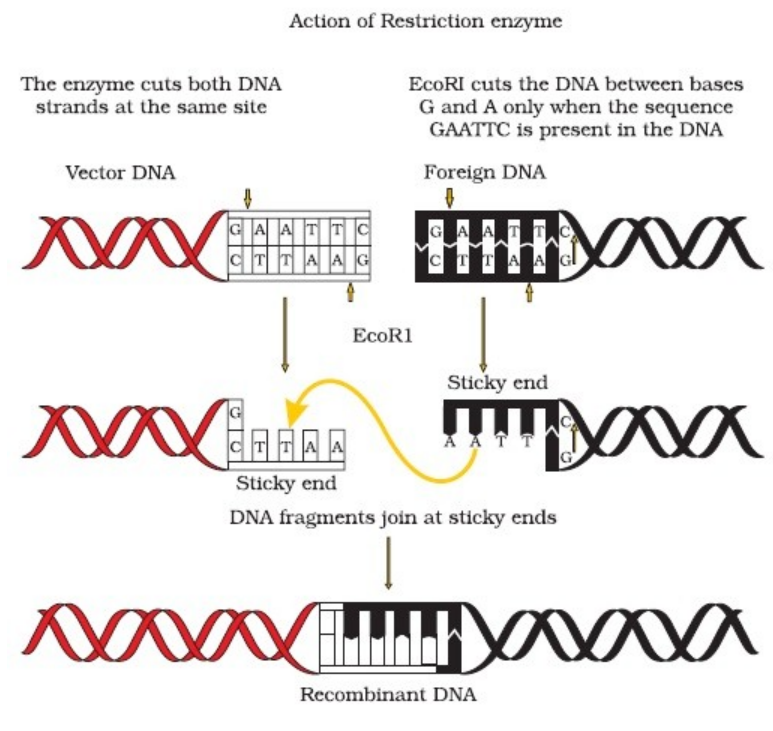
- Recognize specific DNA sequences (recognition sites) and cut DNA at precise locations.
- Types:
- Endonucleases: Cut within DNA strand.
- Exonucleases: Remove nucleotides from DNA ends.
- Example: Hind II, EcoRI.
- Palindromic sequences: Same forward & backward.
5’ – GAATTC – 3’
3’ – CTTAAG – 5’ - Cutting leaves sticky ends → useful for joining DNA fragments.
2. Polymerase Enzymes
- Used in PCR to amplify DNA segments.
- Example: Taq polymerase from Thermus aquaticus is thermostable, used in high-temperature cycles of PCR.
3. Ligases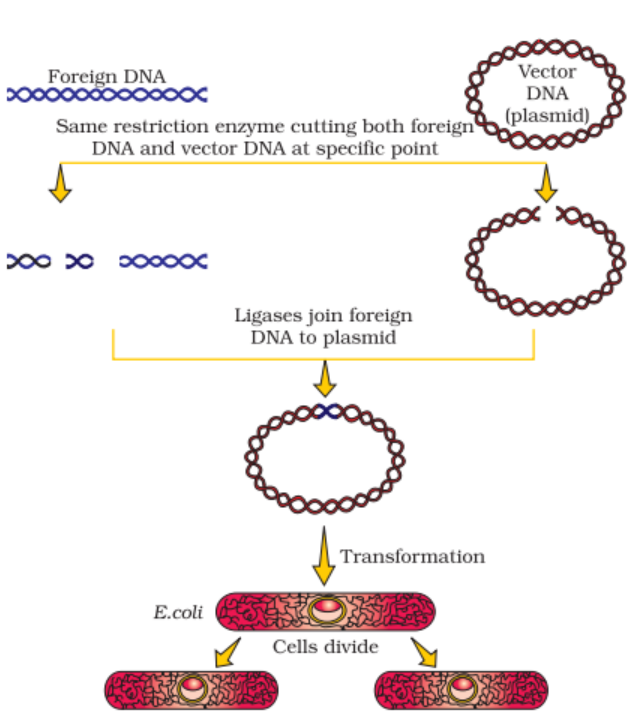
- Join DNA fragments by forming phosphodiester bonds.
- Essential for creating recombinant DNA.
4. Vectors
- DNA molecules that carry foreign genes into host cells.
- Examples: Plasmids, Bacteriophages, Viruses (e.g., Retrovirus, Agrobacterium T-DNA).
- Features of a good vector:
- Origin of replication: Allows replication of inserted DNA.
- Selectable marker: Distinguishes transformants from non-transformants.
- Cloning sites: Restriction sites for inserting foreign DNA.
5. Host Organisms
- Bacteria (e.g., E. coli) most commonly used.
- Host cells must be made competent (e.g., Ca²⁺ treatment, microinjection in animal cells) to take up recombinant DNA.
🔬 Steps in Recombinant DNA Technology
Isolation of DNA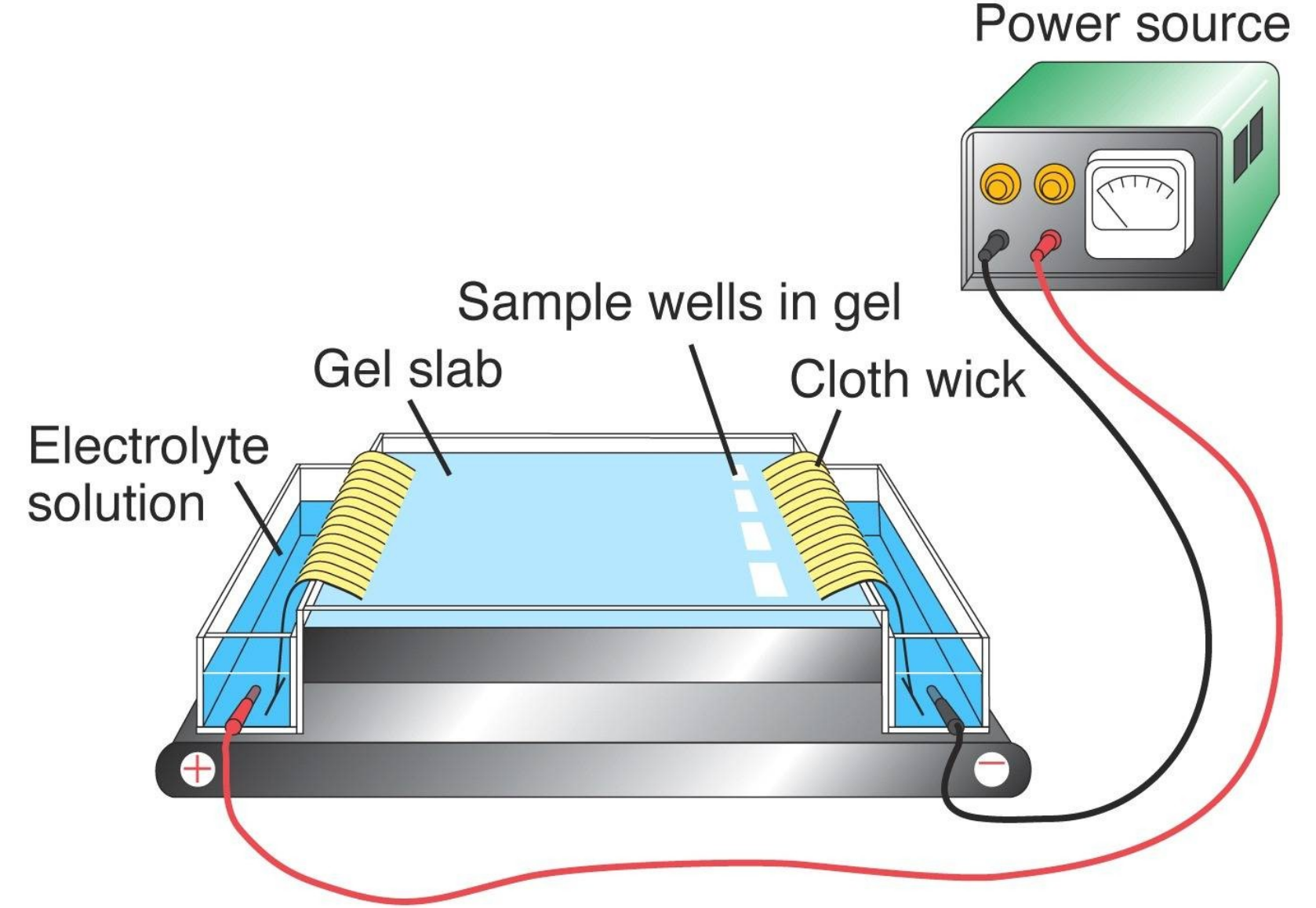
- Break cells → release DNA from nucleus, mitochondria, or plasmids.
- Enzymes used: cellulase (plants), lysozyme (bacteria), chitinase (fungi).
Cutting DNA with Restriction Enzymes
- Cuts DNA at specific sites → generates fragments with sticky ends.
- Vector DNA is cut with same enzyme for complementary ends.
Separation of DNA Fragments
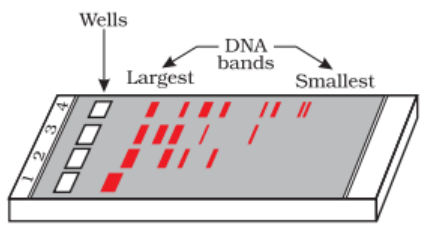
- Gel Electrophoresis:
- DNA is negatively charged → moves towards anode.
- Agarose gel acts as a sieve → separates by size.
- Visualized by ethidium bromide under UV light.

Ligation of DNA
- DNA fragments joined with DNA ligase → recombinant DNA formed.
Insertion into Host Cells
- Methods:
- Bacterial transformation (competent cells)
- Microinjection in animal cells
- Viral vectors (Agrobacterium in plants, retrovirus in animals)
- Bacterial transformation (competent cells)
Amplification of Gene (PCR)
- Repeated cycles of denaturation, annealing, extension using primers and Taq polymerase.
- Produces billions of copies of DNA in vitro.
Expression of Foreign Gene
- Recombinant DNA expressed → produces desired protein.
- Conditions optimized for promoter, codon usage, host strain.
Downstream Processing
- Separation, purification, and formulation of product.
- Quality control before market release.
- Example products: insulin, growth hormones, vaccines, enzymes.
💡 Summary Table: Recombinant DNA Technology
| Step | Key Tool/Enzyme | Purpose |
|---|---|---|
| DNA Isolation | Lysozyme, Cellulase | Release DNA from cells |
| Cutting DNA | Restriction Endonuclease | Specific DNA cleavage |
| DNA Separation | Agarose Gel Electrophoresis | Fragment separation by size |
| Ligation | DNA Ligase | Join DNA fragments |
| Vector & Host | Plasmids, Viruses | Transfer DNA to host |
| Amplification | PCR, Taq polymerase | Multiply gene copies |
| Expression | Promoters, Host cells | Produce protein |
| Downstream Processing | Filtration, Purification | Obtain final product |
📝 Quick Recap
Biotechnology: Using living organisms/components for products/services.
Principles: Genetic engineering + microbial/chemical engineering.
Genetic Engineering: Alter DNA → recombinant DNA → host → desired product.
Tools: Restriction enzymes, ligases, vectors, polymerases.
Vectors: Plasmids, bacteriophages, viruses; must have origin, selectable marker, cloning site.
Host Cells: Bacteria, plant, animal; made competent for DNA uptake.
PCR: Amplifies DNA using primers & Taq polymerase.
Bioreactors: Large vessels to produce recombinant proteins under controlled conditions.
Products: Insulin, growth hormones, vaccines, enzymes, antibiotics.