
2.20 Oxidation, Reduction and Redox (Oxygen and Electron Definitions)
Oxidation and reduction are chemical processes that always occur together in a reaction.
Oxidation
Oxidation can be defined in two ways: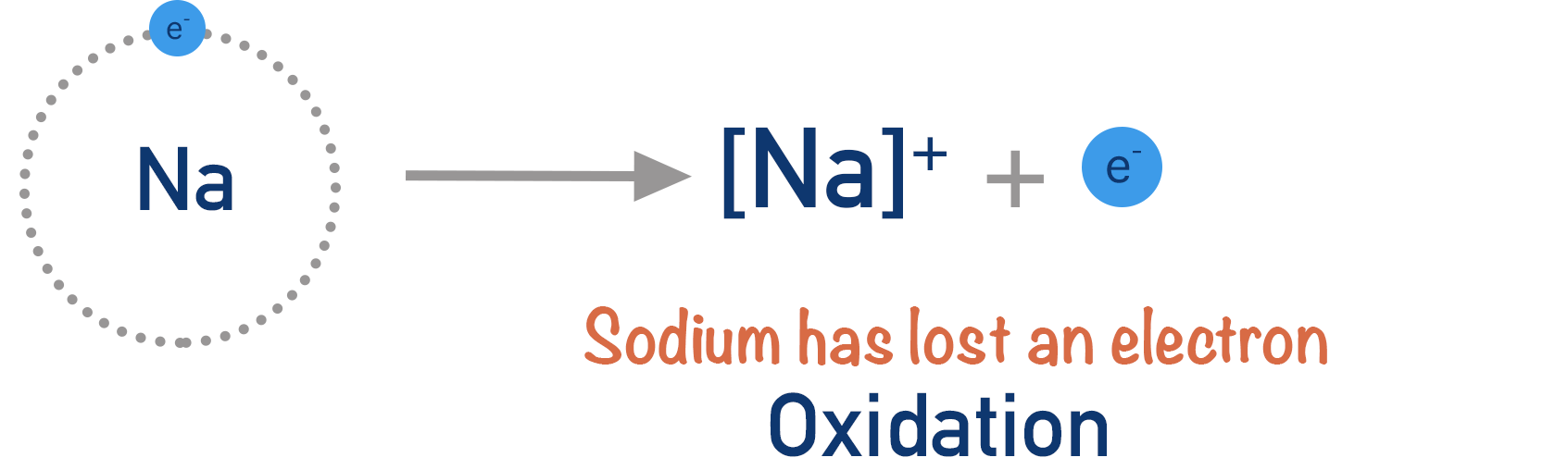
- Gain of oxygen
- Loss of electrons
Example (oxygen definition):
\( \mathrm{2Mg(s) + O_2(g) \rightarrow 2MgO(s)} \)
Magnesium gains oxygen, so magnesium is oxidised.
Example (electron definition):
\( \mathrm{Mg \rightarrow Mg^{2+} + 2e^-} \)
Magnesium loses electrons, so it is oxidised.
Reduction
Reduction can also be defined in two ways: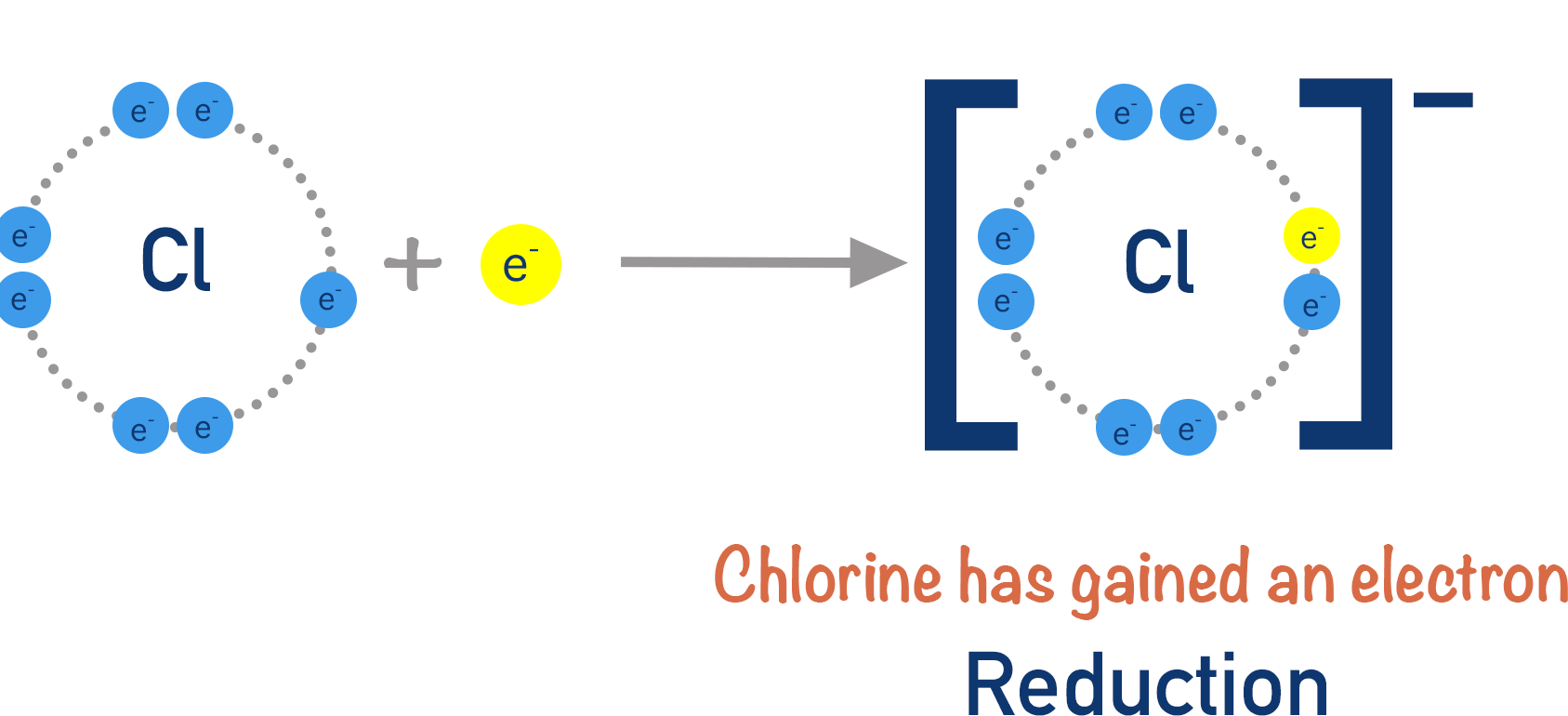
- Loss of oxygen
- Gain of electrons
Example (oxygen definition):
\( \mathrm{CuO(s) + Mg(s) \rightarrow Cu(s) + MgO(s)} \)
Copper(II) oxide loses oxygen, so it is reduced.
Example (electron definition):
\( \mathrm{Cu^{2+} + 2e^- \rightarrow Cu} \)
Copper ions gain electrons, so they are reduced.
Redox Reaction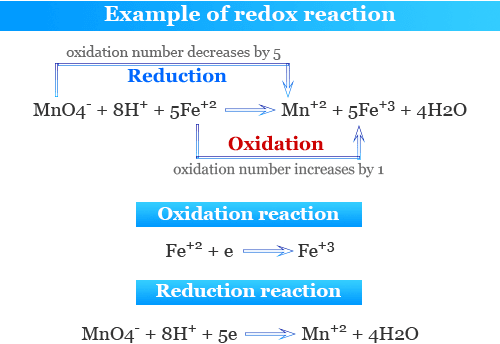
A redox reaction is a reaction in which oxidation and reduction occur at the same time.
In the reaction:
\( \mathrm{CuO + Mg \rightarrow Cu + MgO} \)
- Magnesium is oxidised (gains oxygen / loses electrons).
- Copper(II) oxide is reduced (loses oxygen / gains electrons).
Oxidising Agent
An oxidising agent is a substance that causes another substance to be oxidised.
An oxidising agent: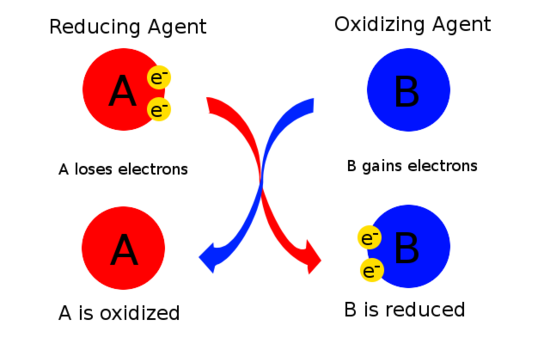
- Gives oxygen to another substance, or
- Gains electrons
It is itself reduced.
Reducing Agent
A reducing agent is a substance that causes another substance to be reduced.
A reducing agent:
- Removes oxygen from another substance, or
- Loses electrons
It is itself oxidised.
| Term | Oxygen Definition | Electron Definition |
|---|---|---|
| Oxidation | Gain of oxygen | Loss of electrons |
| Reduction | Loss of oxygen | Gain of electrons |
| Oxidising agent | Gives oxygen | Gains electrons |
| Reducing agent | Removes oxygen | Loses electrons |
Example 1 (Conceptual):
Is oxygen oxidised or reduced in the reaction \( \mathrm{2Mg + O_2 \rightarrow 2MgO} \)?
▶️ Answer/Explanation
Oxygen gains electrons.
Therefore oxygen is reduced.
Example 2 (Application):
Identify the reducing agent in \( \mathrm{CuO + Mg \rightarrow Cu + MgO} \).
▶️ Answer/Explanation
Magnesium removes oxygen from copper oxide.
Magnesium is oxidised.
Therefore magnesium is the reducing agent.
Example 3 (Hard):
Explain fully why the reaction between magnesium and copper(II) oxide is a redox reaction using both oxygen and electron definitions.
▶️ Answer/Explanation
Magnesium gains oxygen, so it is oxidised.
Copper(II) oxide loses oxygen, so it is reduced.
Using electron definitions, magnesium loses electrons to form \( \mathrm{Mg^{2+}} \).
Copper ions gain electrons to form copper metal.
Oxidation and reduction occur at the same time.
Therefore the reaction is a redox reaction.