IIT JEE Main Maths -Unit 12- Scalar (dot) product- Study Notes-New Syllabus
IIT JEE Main Maths -Unit 12- Scalar (dot) product – Study Notes – New syllabus
IIT JEE Main Maths -Unit 12- Scalar (dot) product – Study Notes -IIT JEE Main Maths – per latest Syllabus.
Key Concepts:
- Dot Product (Scalar Product)
- Properties of Scalar (Dot) Product
Dot Product (Scalar Product)
The dot product of two vectors is a real number (scalar) that measures how much one vector extends in the direction of another. In JEE problems, it is widely used for angles, projections, perpendicularity, work done, direction ratios, and vector proofs.
If \( \vec{a} = (a_1, a_2, a_3) \) and \( \vec{b} = (b_1, b_2, b_3) \), then
\( \vec{a} \cdot \vec{b} = a_1b_1 + a_2b_2 + a_3b_3 \)
This is purely a scalar quantity.
Geometric Meaning![]()
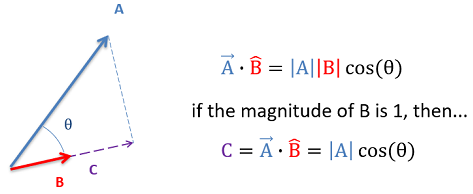
\( \vec{a} \cdot \vec{b} = |\vec{a}|\,|\vec{b}| \cos\theta \)
Here \( \theta \) is the angle between vectors.
Condition for Perpendicularity
\( \vec{a} \cdot \vec{b} = 0 \quad \text{implies vectors are perpendicular} \)
Component of One Vector Along Another
Component of vector \( \vec{a} \) along direction of \( \vec{b} \) is
\( \text{Comp}_{\vec{b}}(\vec{a}) = \dfrac{\vec{a} \cdot \vec{b}}{|\vec{b}|} \)
Projection Formula
\( \text{Proj}_{\vec{b}}(\vec{a}) = \left( \dfrac{\vec{a} \cdot \vec{b}}{|\vec{b}|^2} \right) \vec{b} \)
Important Properties
- Commutative: \( \vec{a} \cdot \vec{b} = \vec{b} \cdot \vec{a} \)
- Distributive: \( \vec{a} \cdot (\vec{b} + \vec{c}) = \vec{a} \cdot \vec{b} + \vec{a} \cdot \vec{c} \)
- Scalar multiplication: \( (k\vec{a}) \cdot \vec{b} = k(\vec{a} \cdot \vec{b}) \)
- \( \vec{a} \cdot \vec{a} = |\vec{a}|^2 \)
Example
Find \( \vec{a} \cdot \vec{b} \) where \( \vec{a} = (2, 3, -1) \) and \( \vec{b} = (1, -2, 4) \).
▶️ Answer / Explanation
\( \vec{a} \cdot \vec{b} = 2(1) + 3(-2) + (-1)(4) = 2 – 6 – 4 = -8 \)
Dot product = -8
Example
Find the angle between vectors \( \vec{a} = (4, 2, -4) \) and \( \vec{b} = (1, -1, 2) \).
▶️ Answer / Explanation
Step 1: Compute dot product
\( \vec{a} \cdot \vec{b} = 4(1) + 2(-1) + (-4)(2) = 4 – 2 – 8 = -6 \)
Step 2: Magnitudes
\( |\vec{a}| = \sqrt{16 + 4 + 16} = \sqrt{36} = 6 \)
\( |\vec{b}| = \sqrt{1 + 1 + 4} = \sqrt{6} \)
Step 3: Use formula
\( \cos\theta = \dfrac{\vec{a} \cdot \vec{b}}{|\vec{a}|\,|\vec{b}|} = \dfrac{-6}{6\sqrt{6}} = -\dfrac{1}{\sqrt{6}} \)
\( \theta = \cos^{-1}\left( -\dfrac{1}{\sqrt{6}} \right) \)
Example
Find the projection of vector \( \vec{a} = (3, -1, 0) \) on vector \( \vec{b} = (2, 2, -1) \).
▶️ Answer / Explanation
Step 1: Dot product
\( \vec{a} \cdot \vec{b} = 3(2) + (-1)(2) + 0(-1) = 6 – 2 + 0 = 4 \)
Step 2: Magnitude of \( \vec{b} \)
\( |\vec{b}|^2 = 2^2 + 2^2 + (-1)^2 = 9 \)
Step 3: Projection formula
\( \text{Proj}_{\vec{b}}(\vec{a}) = \left( \dfrac{4}{9} \right)(2, 2, -1) \)
\( = \left( \dfrac{8}{9},\; \dfrac{8}{9},\; -\dfrac{4}{9} \right) \)
Projection vector = \( \left( \dfrac{8}{9},\; \dfrac{8}{9},\; -\dfrac{4}{9} \right) \)
Properties of Scalar (Dot) Product
The dot product is a scalar quantity obtained by multiplying the magnitudes of two vectors and the cosine of the angle between them. Its properties are very important in JEE vector algebra and geometry.
If \( \vec{a} = (a_1, a_2, a_3) \) and \( \vec{b} = (b_1, b_2, b_3) \), then
\( \vec{a} \cdot \vec{b} = a_1b_1 + a_2b_2 + a_3b_3 \)
Geometrically,
\( \vec{a} \cdot \vec{b} = |\vec{a}|\,|\vec{b}| \cos\theta \)
Commutative Property
\( \vec{a} \cdot \vec{b} = \vec{b} \cdot \vec{a} \)
- Order does not matter because multiplication of components is commutative.
Distributive Property
\( \vec{a} \cdot (\vec{b} + \vec{c}) = \vec{a} \cdot \vec{b} + \vec{a} \cdot \vec{c} \)
- Useful when expanding expressions or simplifying geometry questions.
Scalar Multiplication Property
\( (k\vec{a}) \cdot \vec{b} = k(\vec{a} \cdot \vec{b}) = \vec{a} \cdot (k\vec{b}) \)
- Scalar factors can be taken out of any one vector.
Orthogonality Condition
\( \vec{a} \cdot \vec{b} = 0 \quad \text{if and only if vectors are perpendicular} \)
- Most important property used in JEE for perpendicularity.
Dot Product With Itself
\( \vec{a} \cdot \vec{a} = |\vec{a}|^2 \)
- Helps compute magnitude easily.
Angle Between Two Vectors
\( \cos\theta = \dfrac{\vec{a} \cdot \vec{b}}{|\vec{a}|\,|\vec{b}|} \)
- Used to find acute, obtuse, or right angle.
Projection of One Vector on Another
\( \text{Projection of } \vec{a} \text{ on } \vec{b} = \left( \dfrac{\vec{a} \cdot \vec{b}}{|\vec{b}|^2} \right)\vec{b} \)
Cauchy Schwarz Inequality
\( |\vec{a} \cdot \vec{b}| \le |\vec{a}|\,|\vec{b}| \)
- Equality holds only if vectors are parallel.
Triangle Inequality (Using Dot Product)
\( |\vec{a} + \vec{b}|^2 = |\vec{a}|^2 + |\vec{b}|^2 + 2\vec{a} \cdot \vec{b} \)
- This helps in proving many geometry results in JEE.
Zero Vector Property
\( \vec{a} \cdot \vec{0} = 0 \)
- Zero vector is perpendicular to every vector.
Example
Given vectors \( \vec{a} = (2, -1, 3) \), \( \vec{b} = (1, 4, -2) \), compute:
(i) \( \vec{a} \cdot \vec{b} \)
(ii) \( |\vec{a}|^2 \)
(iii) Check if vectors are perpendicular.
▶️ Answer / Explanation
(i) \( \vec{a} \cdot \vec{b} = 2(1) + (-1)(4) + 3(-2) = 2 – 4 – 6 = -8 \)
(ii) \( |\vec{a}|^2 = \vec{a} \cdot \vec{a} = 2^2 + (-1)^2 + 3^2 = 4 + 1 + 9 = 14 \)
(iii) Dot product is not zero. So vectors are not perpendicular.
Example
Find the angle between vectors \( \vec{a} = (4, 2, -4) \), \( \vec{b} = (1, -1, 2) \). Also find the projection of \( \vec{a} \) on \( \vec{b} \).
▶️ Answer / Explanation
Step 1: Dot product
\( \vec{a} \cdot \vec{b} = 4(1) + 2(-1) + (-4)(2) = 4 – 2 – 8 = -6 \)
Step 2: Magnitudes
\( |\vec{a}| = \sqrt{16 + 4 + 16} = \sqrt{36} = 6 \)
\( |\vec{b}| = \sqrt{1 + 1 + 4} = \sqrt{6} \)
Step 3: Angle formula
\( \cos\theta = \dfrac{-6}{6\sqrt{6}} = -\dfrac{1}{\sqrt{6}} \)
\( \theta = \cos^{-1}\left( -\dfrac{1}{\sqrt{6}} \right) \)
Step 4: Projection of \( \vec{a} \) on \( \vec{b} \)
\( \text{Proj}_{\vec{b}}(\vec{a}) = \left( \dfrac{\vec{a} \cdot \vec{b}}{|\vec{b}|^2} \right)\vec{b} = \left( \dfrac{-6}{6} \right)\vec{b} = -1 \cdot \vec{b} \)
Projection vector \( = (-1,\; 1,\; -2) \)
Example
If vectors \( \vec{a} = (k, 2, -1) \), \( \vec{b} = (1, 3, 4) \), are such that the projection of \( \vec{a} \) on \( \vec{b} \) equals \( 2\vec{b} \), find the value of \( k \).
▶️ Answer / Explanation
Given:
\( \text{Proj}_{\vec{b}}(\vec{a}) = \left( \dfrac{\vec{a} \cdot \vec{b}}{|\vec{b}|^2} \right)\vec{b} = 2\vec{b} \)
So
\( \dfrac{\vec{a} \cdot \vec{b}}{|\vec{b}|^2} = 2 \)
Step 1: Compute dot product
\( \vec{a} \cdot \vec{b} = k(1) + 2(3) + (-1)(4) = k + 6 – 4 = k + 2 \)
Step 2: Compute \( |\vec{b}|^2 \)
\( |\vec{b}|^2 = 1^2 + 3^2 + 4^2 = 1 + 9 + 16 = 26 \)
Step 3: Apply condition
\( \dfrac{k + 2}{26} = 2 \)
\( k + 2 = 52 \)
\( k = 50 \)
Final Answer: \( k = 50 \)
